FJSE

Fédération des Jeunes Serbes d’Europe

Federation of Young Serbs of Europe

Федерација младих Срба Европе

Föderation der Jungen Serben Europas

23 June 2026

Pexels seymasungr 1499342462 29253139
Culture, Uncategorised

A Review of the Poetry Collection by Simona Dmitrovic

On the occasion of the publication of Simona Dmitrović’s poetry collection “Osim šumskog požara” (“Except for the Forest Fire”), jointly published by the publishing houses Slavitid and PLAN B, Zacharie Zaoui, holder of a Master’s degree (MEGEN) from the Sorbonne, has written a review of this work. We invite you to discover it below.

Tajna Srpski vladara i slikara
Culture, Uncategorised

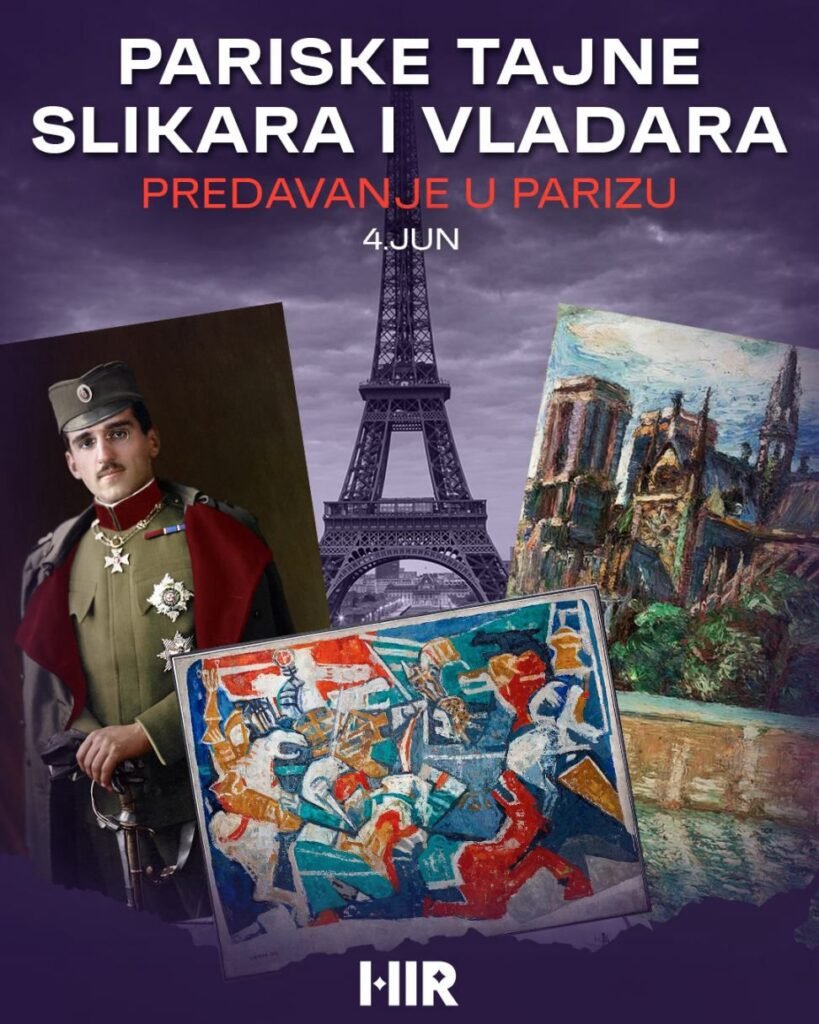
The Parisian Secrets of Serbian Rulers and Painters

Imagine this: you are standing in a Parisian studio, surrounded by canvases that are yet to become part of the history of Serbian art. Or you are sitting at the very table where Serbian rulers once negotiated the fate of a small Balkan state, at a moment when Europe itself was changing its face. This is not a tourist story about Paris. This is a story about what Paris does to a person who approaches it with an open heart — and closed eyes. A ruler who, in France, encountered European ideas of freedom and modern society, while another built diplomatic ties with Paris at a time when Europe itself was changing its face. We will also speak of a ruler who did not love power, but rather the luxury of Paris and its artistic scene. At the same time, in Parisian studios and galleries, another kind of history is being written. An artist who discovers modern art and brings a new energy to Serbian painting. A painter who finds inspiration in Montparnasse and creates works under the influence of the Parisian avant-garde. There is also the enigmatic young collector who, in Paris, works alongside some of the most important names in modern art and builds one of the most fascinating collections of his time. And, of course, the most renowned Serbian painter, who understood how Paris perceives elegance, prestige, and the image of society. The lecture will be held in collaboration with Kulturni HIR on 4 June in Paris.   This is not a lecture.This is an encounter with stories that have waited to be told. Резервишите своје место

Fédération des Jeunes Serbes d’Europe
Culture, Uncategorised

Eurovision 2025 – Serbia Shines, Even Without Reaching the Final!

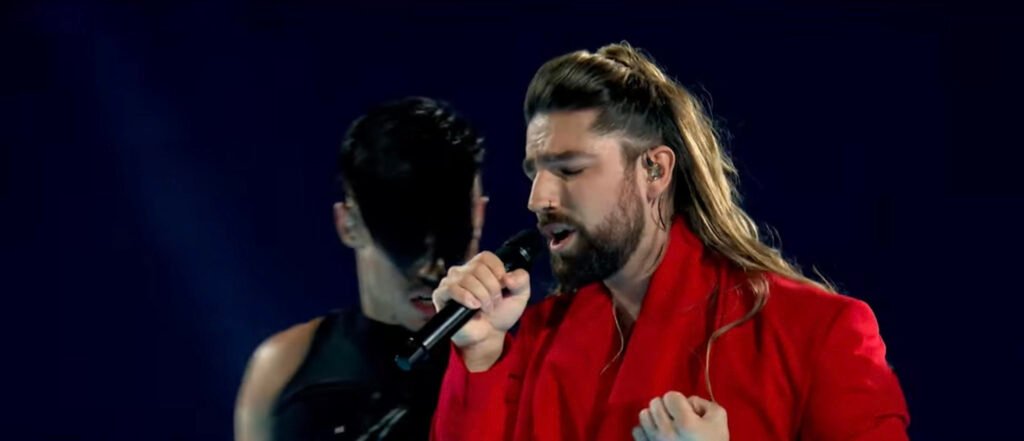
Stefan Zdravković, known as Princ od Vranja (Prince of Vranje), is a Serbian singer born in 1993 in Vranje. He has lived in Belgrade since childhood, and in addition to singing, he also plays the guitar and drums. Before fully dedicating himself to music, he was a Serbian karate champion and vice-champion, and even a member of the national team. He began engaging with music at the age of 15, forming a band called Šesta žica (Sixth String) with friends from high school. At the same time, he studied philology at the University of Belgrade, specializing in Scandinavian languages and literature, particularly Norwegian. Since 2016, he has been the lead singer of the band Sizip. In 2020, he played the title role in the musical Jesus Christ Superstar, produced by the Cultural Center of the Student City of the University of Belgrade. He has also participated in numerous music festivals, including Slavianski Bazaar in Belarus, as well as various events in Bulgaria, Kazakhstan, Lithuania, Italy, and Spain. In 2021, he competed in The Voice of Bulgaria, where he impressed the judges but was eliminated before the final. Еurovision 2025 – Serbia Shines, Even Without Reaching the Final This year, Princ od Vranja touched the hearts of Serbs with his song “Mila,” which won the competition Pesma za Evroviziju 2025. Unfortunately, Serbia did not qualify from the semi-final—marking the first time since 2017 that it failed to reach the final. And yet… Serbia had not had the final say yet! Victory came from a different angle: Teya (Teodora Špirić), an Austrian artist of Serbian descent, was one of the co-writers of the song “Wasted Love,” which brought JJ and Austria the Eurovision 2025 trophy. Between the emotions on stage and triumph behind the scenes, Serbia left a real mark this year. No final—but pride intact. Sources:  https://fr.wikipedia.org/wiki/Princ_od_Vranje https://n1info.rs/magazin/showbiz/zbog-cega-je-glasanje-na-ovogodisnjoj-evroviziji-bilo-zanimljivo/ https://www.youtube.com/watch?v=eoSCoV9s2ak https://www.youtube.com/watch?v=7h8yw_9bCV8&list=RDEMleViyZ7nXxvsowEeNoHrMA&start_radio=1 https://www.youtube.com/watch?v=18BCbtvDcag

Serbia 654340 1280
Culture, Geopolitics, Geopolitics eng, historical archives

Identity: A False Concept or Reality?

From Renan to Kosovo: a reflection on what unites us Carried by the wave of Europe’s migration-shaped electoral politics, the question of identity has imposed itself across all political debates in Europe. This concept, often used imprecisely, provokes significant controversy, as it has never been clearly defined. During the First Congress of Serbian Youth, organized in Vienna on 7 June 2025, while discussions among participants had only just begun with the aim of defining a strategy for the development of Serbian diaspora organizations, the debate quickly shifted toward a reflection on what it actually means to be Serbian. Very different ideas immediately emerged, revealing how difficult it is to define identity. This shift in the discussion toward a question that is at once broad and unresolved highlights a deeper issue: can collective identity still be clearly and commonly defined? And if not, what is the point of speaking about it at all? Identity remains an unresolved question. Yet, as with “woke” ideology, its use in public discourse was supposed to ensure a clear definition. One might therefore assume that the very lack of consensus around the definition of identity explains the differences in how people understand what it means to belong to a nation. The truth is that agreement on such a definition is impossible: the Congress itself could not resolve a debate that has lasted for centuries. Identity is defined as “the character of that which, under different names or forms, constitutes one and the same reality,” according to CNRTL. It is therefore closely linked to the concept of the nation, which is also at the heart of political debate. In this sense, it might be more precise to speak of national identity in order to avoid confusion with individual identity. The question of the nation has long been central to profound philosophical reflections, which help us understand that the debate held at the Vienna Congress, although legitimate, is ultimately infinite in scope. And what is infinite is abstract and beyond our rational grasp: the debate therefore appears futile and unnecessary. The very idea of the nation has divided European societies, sometimes even neighbouring ones. Thus, after the fall of Prussia under Napoleon’s control of the territory, Fichte (Reden an die deutsche Nation, 1808) called for a spiritual and moral renewal of the German people by awakening their national consciousness. For him, the nation refers to a community of language and culture, rather than a legal or political construct. It precedes the state, which exists only to serve it. The people are united by language, education, and culture. Later, Renan developed the “French vision” of the nation in his famous lecture at the Sorbonne in 1882. At a time when nationalism was rising in France following the defeat by Prussia, Renan sought to define the nation from a republican and rational perspective, in opposition to certain identitarian deviations. He argues that the nation is a historical and political construction based on the will to live together. The nation, therefore, is neither race nor language (which may bring people together but does not impose obligation), and even less religion or geographic boundaries. It is characterized by a shared past, through collective memory marked by common suffering and shared glory, as well as by a present-day desire to continue this shared history: what he calls a “daily plebiscite.” This French vision has long existed. The principle of jus soli (right of the soil) has its customary origin in a ruling of 23 February 1515 by the Paris Parliament: a child born to foreign parents was considered a subject of the king, and thus French. After the Revolution, the Napoleonic Code allowed children of foreigners born in France to claim citizenship upon reaching adulthood. In 1889, the Third Republic automatically granted French citizenship to every child of foreign parents born in France, unless they chose to refuse it. This principle is today the subject of numerous criticisms (notably in Mayotte) and has been modified several times. It seems clear today that the French philosophical approach has been confirmed by reality. If some find it difficult to accept, the proof was given during the Congress in Vienna: language or religion can no longer define a nation. Without delving into the fact that many people know the French language and history without feeling French at all, the example of Kosovo is more than sufficient. After the Second World War, Marshal Tito decided to accept Albanian refugees and to marginalise Serbs from that territory, which is nevertheless central to their history, since the Battle of Kosovo (1389) where they managed, despite all circumstances, to repel the Ottomans. Albanians attended Serbian schools, learned their language and history, and benefited from a Yugoslavia that offered them more than they would have had in Albania. One might therefore assume that, after one or two generations, they would become Serbs, at least out of gratitude. Yet, despite everything, they did not hesitate to form an armed organisation that some states labelled as terrorist (the KLA) in order to achieve independence, in violation of international law but with NATO military support. If the West made a strategic mistake here (and itself receives large numbers of migrants, while Russia today uses this tragic violation of international law to justify its “military operation” in Ukraine), the fact remains that a nation is not a matter of language, culture, or religion, but of feeling. It therefore seems clear that, in relation to this issue so important for Serbs, the debate perhaps should not have taken place at all. There is also the question of Serbs whose ancestors emigrated to other countries and who have lost their connection to the homeland. Is it less legitimate to consider them Serbs? Simply because they do not speak the language or are only learning it? And what about those who have fallen in love with Serbia and wish to become Serbian? The question remains without a definitive answer. Yet it seems to me that this debate,

Park 6923928 1280
Culture, Uncategorised

Serbia, Unexpected: Immersing Yourself in a Country that Dances Beyond Its Borders

In the great lottery of European destinations, few manage to draw Serbia on their first try. It does not possess the mythical beaches of the Mediterranean, nor the world-renowned museums of major capitals. Yet it is one of those places that does not try to appeal to everyone — and that is precisely what makes it irresistibly authentic. In Serbia, you are not laid out a red carpet; instead, you are offered a chair, a glass of rakija is poured, and the evening begins. Serbia is a land of embraced contrasts, a wondrous blend of Ottoman heritage, Slavic spirit, Balkan imagination, and post-socialist rawness. It is a territory where history still echoes within its walls, yet where contemporary life unfolds with almost defiant energy. One must go there to understand it — or rather, to feel it. For Serbia is not a backdrop to be observed, but an atmosphere to be lived. Everything most often begins in Belgrade, the capital. If one had to assign it a single adjective, it would likely be: untamed. Belgrade does not strive to be liked at first glance. It is raw, sometimes rough, yet undeniably magnetic. At its heart, the Kalemegdan Fortress has for centuries watched over the confluence of the Danube and Sava rivers, offering a panorama that is at once majestic and uncanny, suspended between military past and romantic encounters. Around it, the city pulses — between austere buildings, bohemian streets, and bars that resemble artistic refuges. When night falls, Belgrade transforms into one of the liveliest capitals in Europe. Here, nightlife is not entertainment — it is discipline. Floating clubs, the so-called splavovi, lined along the Danube, offer music ranging from underground techno to Balkan pop, with the inevitable turbo-folk — a local genre that fuses traditional instruments, electronic rhythms, and emotionally charged lyrics. An incomprehensible mix? Absolutely. But remarkably effective. Yet to reduce Serbia to Belgrade alone would be an injustice. For once you move beyond the capital’s outskirts, the country reveals an entirely different side — abundant nature, a living rural culture, and a way of life that seems to have escaped the modern world’s rush. The mountains of western Serbia, particularly within the Tara and Kopaonik national parks, offer breathtaking landscapes: deep forests, crystal-clear rivers, gentle peaks, and valleys filled with villages where time appears to stand still. There one encounters flocks of sheep, wooden houses, and women in floral aprons offering you hot soup or homemade rakija, with few questions asked. In these rural regions, Serbia’s gastronomic soul finds its fullest expression. Forget vegan diets: here, the table is a sacred place, and always a generous one. Grilled meats, stuffed peppers, cheese pies, pickled vegetables, homemade jams… every dish carries a fragment of history, every recipe a tradition proudly passed down through generations. Bread is baked in a family oven, milk comes from the neighbor’s cow, and rakija is never far away. Toasts are not made out of formality, but to strengthen a moment, a meeting, a life. Yet what truly gives Serbia its distinctive character are its people. Serbs are much like their land: proud, direct, full of contradictions and a profound sense of humanity. Their hospitality is not a service, but a fundamental principle. Informality arrives instantly, conversations are vivid, and irony is a powerful tool of communication. They will debate politics with passion, defend their cuisine as if it were a matter of national identity, and speak of their village as though it were the center of the world — and for them, it often is. Serbs do not try to be liked; they simply are who they are. And perhaps that is precisely what makes them so compelling: the way they combine humor and melancholy, tenderness and roughness, pride and a clear-eyed awareness of reality. A people shaped by history, yet not imprisoned by it. A people who know how to laugh, sing, argue, and above all — share. Traveling through Serbia, it quickly becomes clear that this country is not merely a destination: it is an encounter. An encounter with places, but also with a way of being. Nothing here is entirely planned, everything can happen — and therein lies the charm. One comes to discover, and stays to feel. So, if you are looking for a country that does not rely on easy glamour, but instead offers something real, powerful, and alive… Serbia is waiting. Unembellished, but open-hearted.   Tanja Nikolić, 17 June 2025.

Nasa mis srbije
Culture, Uncategorised

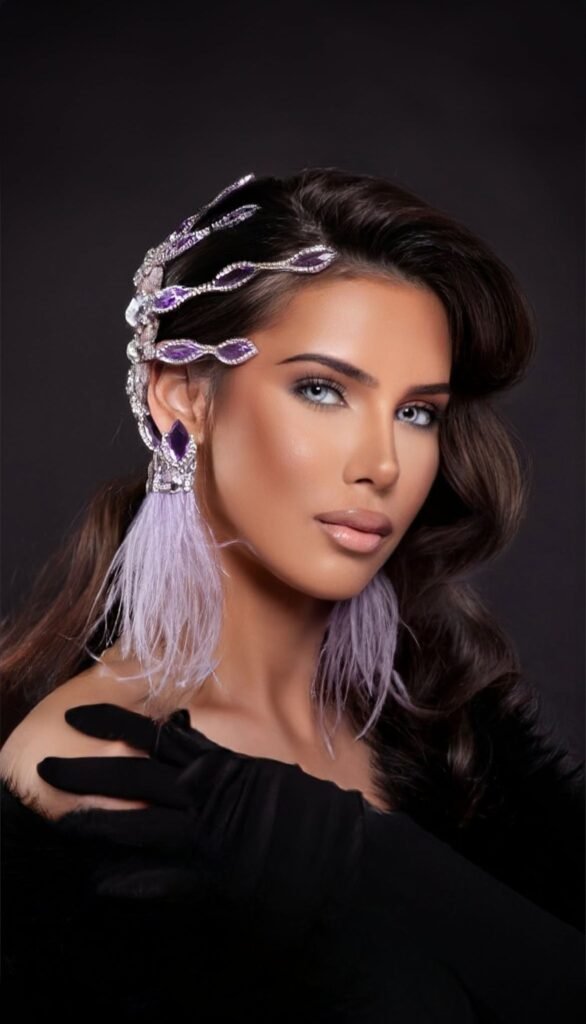
Miss Serbia 2026

Dear members of our community in France and throughout the diaspora, There are moments in life when, no matter where we were born or where we live today, we are brought back to what we carry deep within us—our roots. Serbia is not defined only by its borders, but by all of us who carry it in our hearts, in our language, in our families, and in the memories and dreams that we pass on to future generations. As a Serbian woman born in Paris and raised between two cultures, I have always known where I belong. My love for Serbia was nurtured through stories, traditions, music, holidays, and the values that were instilled in me from childhood. That is precisely why, for me, participating in the Miss Serbia 2026 pageant is much more than a competition—it is an honor, a source of pride, and a responsibility. The Miss Serbia 2026 Final will take place on 8 February 2026 at 9:00 p.m., with a live broadcast on Red TV. For those who will be in Belgrade, it would be a tremendous honor to see you in person at the MTS Hall, where together we can show that the diaspora and the homeland truly breathe as one. Tickets are available at: 👉 https://www.mtsdvorana.rs/dogadjaj/miss-world-serbia-2026 This is not only my journey—it is the story of a young generation in the diaspora that has not forgotten its roots. It is the story of a young woman who wishes to show that Serbia can be loved and cherished no matter where we were born. That our flag is carried in our hearts, and that our identity is preserved with pride. If you would like to support me, please vote for me – Contestant No. 9, Tanja Nikolić ❤️ Your vote is more than just a sign of support—it is a symbol that the diaspora stands with Serbia, that we believe in one another, and that together we can bring the crown home. Thank you from the bottom of my heart for every vote, every message, and every kind thought. May our bond be seen, heard, and felt—because Serbia lives wherever we are. 🇷🇸✨   Tanja Nikolić, 6 February 2026

Momo Kapor
Culture, Uncategorised

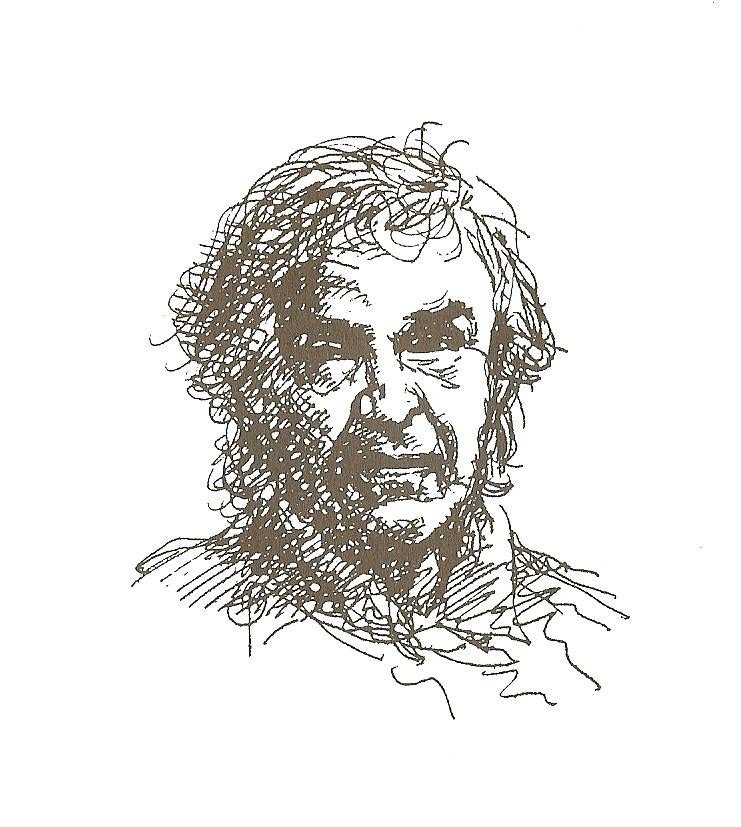
The Magic of Belgrade – Literary Review

The Magic of Belgrade – Momo Kapor The book every Serb must bring with them when they leave Serbia. I know—the title has taken you by surprise. As it should. That is precisely the feeling you experience when you first pick up Momo Kapor and plunge into the opening pages of his work. It happened to me on a February morning, when I came across The Magic of Belgrade on the shelves of the Sorbonne library and, almost by chance, began to read it. It awakened in me that familiar feeling I despise, the one that overcomes me time and again whenever I take off from Belgrade Airport toward that accursed West: the anguish, the pain, the tightening of the chest—all those emotions that we who seek a utopia in Western society feel each time we leave our homeland behind. You know the feeling yourselves; I need not remind you of those turbulent moments of parting. Momo Kapor will do so in my stead, more eloquently and more beautifully than I ever could. One of the most significant chroniclers of Belgrade—and indeed of all Serbia and the Serbian mentality—Kapor writes about something that extends far beyond the geographical boundaries of the Republic of Serbia and the region. Belgrade is, in fact, Serbia in miniature: a city to which people from all corners of the Serbian lands have always come, bringing with them their accents, mentalities, and habits, blending them into that unique Belgrade mixture. Momo Kapor himself belongs to that kind: an eccentric who came to Belgrade, a true Belgrader by choice, of the sort this city has always abounded in. And it is precisely from this dual position, as both observer and participant, that he succeeds in laying bare the Belgrade man to his very core. In my deepest conviction, Kapor is above all a chronicler of the Serbian mentality in its broadest sense. I say this on the basis of my own experience: I found myself on ninety percent of the pages of this book, despite having almost no connection to Belgrade beyond occasional visits. Just as the author himself once said—and as we all know—Belgrade is one great village, which is to say: Serbia. What particularly reveals the greatness of this writer is his constant walk along the thin line between patriotism and chauvinism, and the fact that he never once stumbles into the kind of praise that reeks of cheap sentimentality. This sense of measure is perhaps owed to his Herzegovinian side, much as it was in the case of Dučić and others who gave Serbia some of its most powerful voices precisely from that slightly displaced perspective. Why, then, is this book essential reading for every Serb who leaves Serbia? Because Kapor ultimately answers the question we all carry within us, no matter how hard we try to suppress it. Why, every single day, regardless of all we have achieved and everything we once hoped for, we have the feeling that something is missing. That we are incomplete. That there is one final piece absent from the puzzle, the piece that would complete the perfect mosaic of life in the West. Kapor offers us possible answers, and he does so with a lightness that hurts more than any philosophical debate. Perhaps it is the smell of sauerkraut that greets you the moment you step into your apartment building. Perhaps it is the bench where you kissed a girl for the first time. Perhaps it is that tavern in Skadarlija where you first got drunk and, paradoxically, first felt perfectly at home. These are all the little things we never take into account when we pack our suitcases and leave forever for a place where none of them exist, and where, only then, those very same trifles begin to haunt us like the loveliest of ghosts. For, with that characteristically subtle and gentlemanly finesse of his, Kapor has left us a gallery of characters we shall mourn forever: those cosmopolitan Belgraders, native sons of the city who, when you meet them in Paris or Geneva, themselves no longer know how to reconcile what they once were with what they have become. I often speak of them with my friends, because that type of person—elegant beyond place and time—exists only among “Beogradjani” and nowhere else. Kapor portrays them in several chapters that, to me, are among the most vivid in the book: The Belgrade Flea Market, with all its virtues that the native Belgrader nevertheless despises, because nothing there is as perfectly ordered as in his father’s apartment on Mackenzie Street; but also in the chapter titled Return to the Homeland, where coming back to one’s country becomes the most intimate and cruel mirror of the self, the naked truth. Then there are chapters such as A Belgrader in Switzerland, In the Great World, and Belgrade Is the World, which together form an unwritten map of the Serbian soul scattered across foreign meridians. Yet this book is not indispensable only to those who have already left. It is equally necessary for every Serb who has ever entertained the thought of leaving but has not yet taken that step. Every time that they feel that they have had enough of everything, let them pick it up and read only a few chapters; they will understand why Serbia is not a country like any other, why it is a place that exists nowhere else in the world. And there is one more group for whom this book is simply essential: foreigners who wish to understand the Serbian mentality to its very core, who wish finally to grasp why they are so fascinated by us whenever they meet us somewhere in the world. From Alaska to New Zealand, everyone who comes to Serbia leaves pleasantly surprised. When we ask them why, we ourselves do not know how to answer, and together we remain puzzled by that little miracle. Well then, to both them and to us, Momo Kapor offers

Scroll to Top