
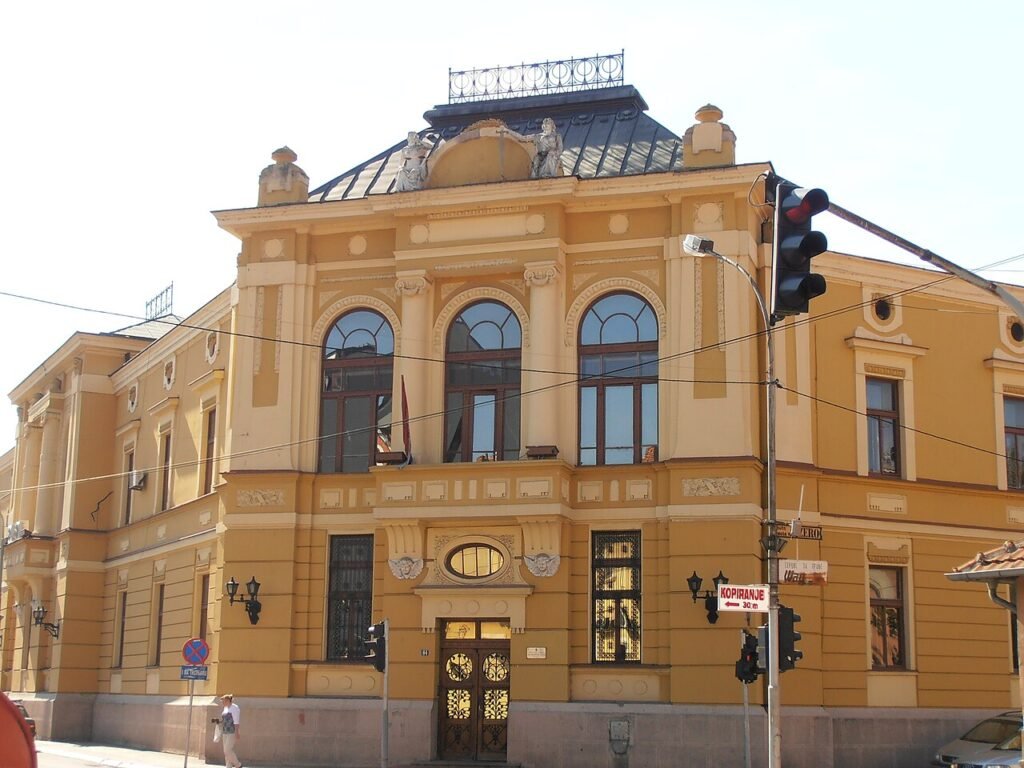
Jagodina, little-known pearl of central Serbia
Discover Jagodina, a historic town in the heart of Serbia. Between heritage, museums, gastronomy and nature, explore this little-known pearl of the Morava valley. History and heritage of Jagodina From the Roman road to the Serbian dynasties In the heart of the Morava valley, lies Jagodina, a town with ancient history and discreet charm. First mentioned in the 14th century in the documents of Princess Milica, Jagodina owes its importance to its strategic position next to the ancient Roman road linking Rome to Constantinople via the Morava valley. Even today, the surrounding area is full of little-known archaeological sites, particularly around Rekovac, testifying to the historical richness of the region. Thanks to its geographical location and dynamism, Jagodina has always played a key role — whether in the Ottoman era, during the Serbian uprisings of Karadjordje and Prince Miloš, or later during the Kingdom of Yugoslavia. The Pomoravlje district, of which Jagodina is the capital, was then an important center of economic and cultural activity. From crafts to industry: the rise of Jagodina The arrival of Slovak, Czech and other Central European immigrants contributed to the city's industrial and intellectual growth. Very quickly, Jagodina distinguished itself in the production and export of butchery products – pork, chicken and turkey – thanks to renowned companies like Klefiš and Yuhor. This specialization has also earned the inhabitants an affectionate nickname: the “turkeys” of Jagodina. One of the first Serbian breweries was opened there in 1852 and operated until the 2010s. After the Second World War, the city modernized at high speed, driven by the famous cable factory, once a flagship of Yugoslav industry that Marshal Tito liked to present to the leaders of the non-aligned movement. Jagodina, educational and cultural center of the Morava valley Today, despite the demographic decline that followed the Yugoslav wars, Jagodina remains the administrative and cultural center of Pomoravlje. It is home to one of the oldest teaching faculties in Serbia, attached to the University of Kragujevac, which has been training generations of teachers and educators since 1898 for almost a century and a half. What to do and see in Jagodina? For a town of around 10,000 inhabitants, Jagodina surprises with its cultural vitality: three museums welcome visitors. The Museum of Naive Art, known throughout the world, the Heritage Museum retracing 6,000 years of regional history, and finally the Wax Museum, which presents the most significant figures in Serbian history. The municipal park, with its artificial waterfall, is an unmissable place for a walk, as is the famous Aqua Park , opened in 2009, one of the first of its kind in Serbia. Nearby, the Levač and Lozovik wine route invites you to discover the surrounding vineyards and villages. For animation fans, Jagodina hosts the Animator Fest every year, the international animated film festival. This unmissable event brings together directors, students, enthusiasts and professionals from all over Europe to celebrate creativity and innovation in animated cinema. Organized at the Jagodina Cultural Center, the festival offers screenings, workshops, professional meetings as well as official competitions highlighting young talents as well as recognized artists. Image: Cveleglg , CC BY 4.0 license. Where to eat and go out in Jagodina? For a taste of local flavors, nothing beats a dinner at the Etno Konak restaurant, which offers panoramic views of the city and traditional dishes. Fans of a chic atmosphere will appreciate the R Club, while the Status and Skver bars are the perfect places to observe local life and listen to the latest city news. The legend of the Jagodina turkey But why do we call the inhabitants of Jagodina “turkeys”? Legend has it that one day a turkey was hit by a train: its head fell in Jagodina, its entrails in Ćuprija and its liver in Paraćin. Since then, the inhabitants of Jagodina have been nicknamed Ćurani (turkeys), those of Ćuprija the Crevari (people of the bowels) and those of Paraćin the Džigerani (people of the liver). A tasty story that demonstrates typical Serbian humor. Sport and personalities of Jagodina Image: Ванилица — under Creative Commons Attribution-Share Alike 4.0 International It's impossible to talk about Jagodina without mentioning its football club, which won the Serbian Cup in 2013, making the city part of the national sporting legend. Famous personality linked to Jagodina The legendary Milosav Mitrović (1892–1961), nicknamed Laosa, who since the 1950s became the symbol of the Jagodina brewery, was a great beer lover — and it was the only drink he consumed until the end of his life. He was born and lived in the village of Dragovo. He served as a soldier during the wars of 1914–1918, during which he was seriously wounded, resulting in the amputation of both his legs. According to the Dragovo chronicles, written by Milosav Simić, Laosa was one of the most beloved personalities of this village in the Rekovac region. He often stayed in Jagodina. He owned a carriage and horses, and liked to go for walks to drink beer in the famous Šarena kafana café. Between historical heritage, culinary traditions, unique museums and warm local atmosphere, Jagodina perfectly embodies the soul of central Serbia. This discreet destination offers an authentic immersion in Serbian culture, far from the classic tourist circuits. Nemanja Dimitrijević, November 26, 2025 Useful links: Official website: Град Јагодина – Град будућности – Насловна страница – Добродошли Aquatic Center: Aqua Park Jagodina Animator Fest: Animator Fest Jagodina Srbija Cover image: Ванилица — under Creative Commons Attribution-Share Alike 4.0 International