How to vote in France in the Serbian presidential election on 27 December
Serbia’s presidential election takes place on 27 December 2026. Serbian citizens in France must register with the Embassy in Paris by 5 December. Step-by-step guide and forms.

Serbia’s presidential election takes place on 27 December 2026. Serbian citizens in France must register with the Embassy in Paris by 5 December. Step-by-step guide and forms.
FINAL ICJ REPORT Download
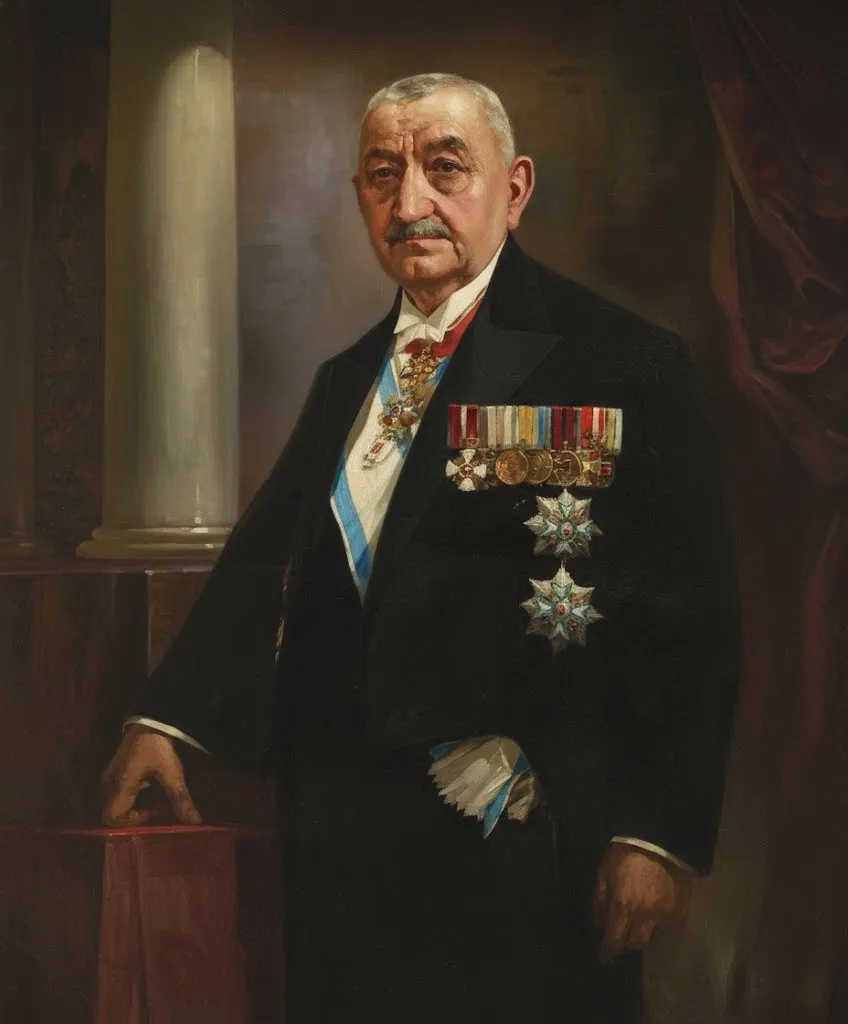
When the topic of important Serbs who have improved not only Serbia but also the world is mentioned, most of us only think of "big names" such as Nikola Tesla, Milutin Milanković or Mihajlo Pupin. Although it is inevitable that these people deserved to be remembered as the greatest minds of our country, Serbia can be proud of many more personalities who left their mark in the field of science and economy . So that their contribution would not be forgotten, here we will look back at the life and work of six lesser-known, but no less important, Serbian personalities. Text author: Dunja Brašanac Nikola Spasic Nikola Spasić (1838–1916) was a Belgrade merchant and one of the greatest Serbian benefactors. He was also the president of the Belgrade Stock Exchange, the president of the Traffic Bank, as well as a member of the Board of Directors of the National Bank of the Kingdom of Serbia. He acquired his wealth through trade, starting with the opancar trade, and later became one of the most successful traders in Belgrade. He left most of his wealth through the Nikola Spasić Endowment, which financed the construction and equipping of hospitals, homes for the elderly and other institutions. At the beginning of the First World War, his wife Anastasija Naka Spasić proposed to financially help the injured Serbian soldiers, with which Spasić established his first endowment, handing over his property to the Serbian National Invalid Fund St. Đorđe. It is particularly significant that his endowment financed the construction of the City Hospital in Zvezdara, and later continued to finance medical equipment for hospitals and to reward students of the Faculty of Medicine and Agriculture at the University of Belgrade. During the Balkan Wars, Spasić even organized a hospital for wounded soldiers at his own expense, and after the war he donated the equipment to the Serbian Red Cross. In addition to the construction of a hospital in Belgrade, after his death, the Endowment of Nikola Spasić also financed hospitals in Kumanovo and Krupanj, as well as a Home for exhausted citizens in Knjaževac . The endowment also invested in education, financing the work of schools, helping students and awarding prizes to the best students. It is particularly interesting that she financed the establishment of orchards and vineyards, and some grape varieties were introduced to Serbia for the first time thanks to her support. Spasić's example is specific in that he turned a huge private fortune into a lasting benefit for health and society, and it is interesting to note that his endowment in 1939 had three percent more capital than Nobel's. Spasić died in 1916 in Corfu, after the Serbian people were drafted into the army during the First World War. For his contributions to society, Spasić was awarded the Takovski Cross of the fourth order, as well as the Order of Saint Sava of the third order. Jovan Karamata Jovan Karamata (1902–1967) was one of the most important Serbian mathematicians of the 20th century. He was born in Zagreb, but he grew up in Zemun and spent most of his academic career in Belgrade and Geneva. He finished college in Belgrade, where he received his doctorate from professor Mihail Petrović Alas, another of our greatest mathematicians. His most important contribution to mathematics was the theory of regularly varying functions , which he developed in the early 1930s, publishing it in the paper "Sur une mode de croissance régulaire des fonctions". This theory allows mathematicians to precisely study the behavior of functions when their values become very large or small, and today has applications in number theory, probability, statistics and other areas of mathematics. His work was so significant that today this field is often referred to as Karamata theory. In addition to the theory of regularly varying functions, Karamata published two papers in 1930 that became particularly important for his international reputation. In the paper "Über die Hardy-Littlewoodsche Umkehrungen des Abelschen Stätigkeitssatzes" he gave an extremely short, only two-page long proof of the important Hardy-Littlewood theorem. His proof was so influential that it was later included among the fifty most important papers published in the Mathematische Zeitschrift during the first sixty years of its publication. Karamata also worked on Tauber's theorems, Fourier analysis, analytical number theory, theory of complex functions and differential equations . During his career, he published about 120 scientific papers and 15 books, leaving a lasting contribution to mathematics. In addition to his own scientific results, he had a great influence on the development of Serbian mathematics through the generations of mathematicians he educated during his work as a professor at the University of Belgrade from 1930 to 1950. In this period, in 1939, Karamata became a member of the Serbian Academy of Sciences and Arts (SANU), which organized the opening of his memorial plaque in Zemun in 2008. Dimitrije Teokarevic Dimitrije Mita Teokarević (1850–1931) was a merchant and industrialist from Leskovac and one of the pioneers of the Serbian textile industry. He was born into a poor family and started working as a servant at the age of nine, and as a young man he was illiterate. Later, he starts working as a cook and finishes school in order to improve his financial situation. In 1884, he participated in the establishment of the first cord factory in Leskovac, in the village of Strojkovac, which laid one of the foundations for the later development of Leskovac as an industrial center. The factory produced cord, then a highly sought-after decorative material for folk costumes, and in 1896 Teokarević participated in the founding of the first woolen fabric factory in Leskovac. In addition to being an entrepreneur, Teokarević was also involved in politics, considering that he was also a member of parliament, as well as the president of the Municipality of Leskovac. Teokarević later expanded his business with his sons to the production of woolen fabrics. In 1920, the family started building a large industrial enterprise for wool processing in
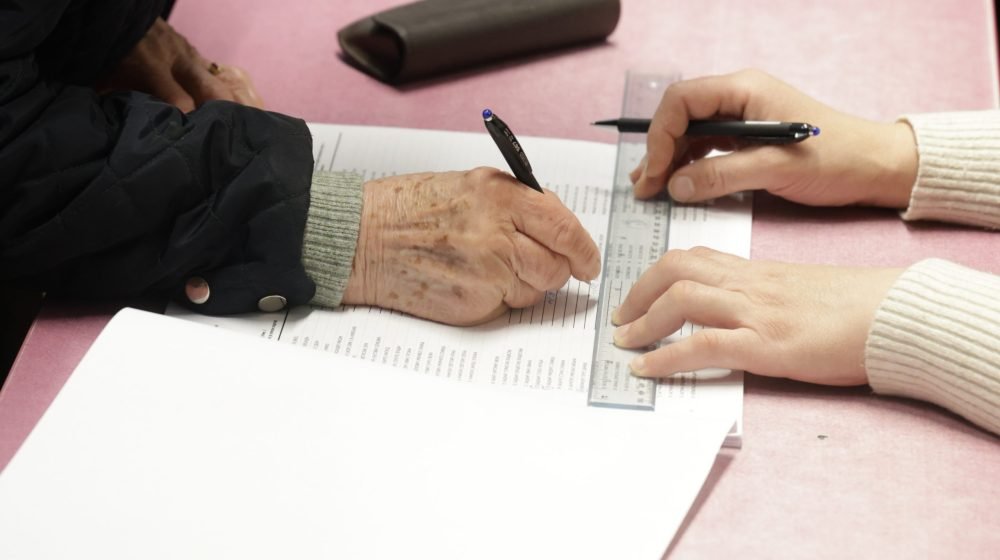
Voting in the diaspora – step by step – for all potential adult voters in the diaspora (Parliamentary elections in 2026) Sequence of steps 1. Check whether you are registered in the Unified Voter's Register in Serbia: https://upit.birackispisak.gov.rs/ (Note: If you do not have a registered residence/address in Serbia or you have deregistered the same when going abroad, you will not be able to register in the Unified Voters' List.) Registration of residence is done exclusively in Serbia, at the local police station, according to the address to which you are applying. 2. If you are not registered in the Unified Voter's Register in Serbia, and you have the conditions for it (citizenship, registered residence in Serbia and a valid Serbian passport or Serbian identity card), submit an application for registration in the Unified Voter's Register in Serbia: https://fjse.fr/wp-content/uploads/2026/09/Zahtev-za-upis-u-JBS_0.pdf How to submit a request Electronically: Visit the page eGovernment where you can quickly and easily submit a request if you have an account on the eGovernment portal, and you access it with a qualified electronic certificate or via the ConsentID mobile application. Personally: Submit a written request in the competent municipality or city (or in the diplomatic and consular representation of the Republic of Serbia if you are staying abroad). 3. If you are registered in the Unified Voters' Register in Serbia, you only need to fill in the request that you want to vote abroad in the upcoming elections (it must be done every time, for each election separately): https://fjse.fr/wp-content/uploads/2026/09/Zahtev-za-glasanje-u-inostranstvu-1.pdf Important note: In order to try to get one or more constituencies in addition to Paris, it is recommended that voters in France write in their application to vote abroad : Lyon Choose just one city — the one closest to you. The goal is to collect a minimum of 100 applications in that city, which is a condition for REC to consider it as a potential election site. Important: Do not select multiple cities — just one. The more applications are concentrated in one city, the greater the chance that an electoral seat will be opened. 4. It is necessary to enter all the required data in the request, then print the request, sign it by hand, scan it and send it, together with a copy of the first page of a valid Serbian passport or a valid Serbian identity card, to a separate e-mail for that. In France, the email address is: izbori.pariz@mfa.rs (which will be active from September 10!) (Note: Only a valid Serbian passport or a valid Serbian identity card can be accepted with a properly filled and signed application – according to current laws, foreign passports or any other foreign documents cannot be accepted). The Embassy forwards your requests to the competent authorities in Serbia and informs you of the response it receives regarding your applications. The deadline for submission of applications is rigorous and it will not be possible to apply for the upcoming elections after it has expired. Note: The deadline for applying to vote in the parliamentary elections is October 3, 2026 until 11 p.m. After the specified time, requests will not be processed, which is why it is very important to apply as soon as possible. All citizens of the Republic of Serbia of legal age, who are registered in the JBS, have the right to apply for voting abroad, regardless of the basis and how long they have been staying abroad. The most common mistakes and how to avoid them 1. Incorrect form – the application for registration in the Unified Voters' Register (JRS) should be filled out and submitted together with the request that you want to vote abroad in the upcoming elections, and only if you are NOT previously registered in the Unified Voters' Register – if you are registered in the JRS, you only fill in the application for voting abroad. 2. The form is not signed – in addition to filling in all the prescribed sections, it is necessary to print the form, sign it by hand, and then scan it and send it to the embassy. 3. A copy of a valid passport or identity card of Serbia has not been submitted (or a document whose validity has expired or a foreign passport or some other foreign document has been submitted) 4. The application was made correctly, but the original valid passport or identity card of Serbia was not brought to the elections – it will not be possible to vote if the identity of the person who came to vote cannot be confirmed based on the above documents.
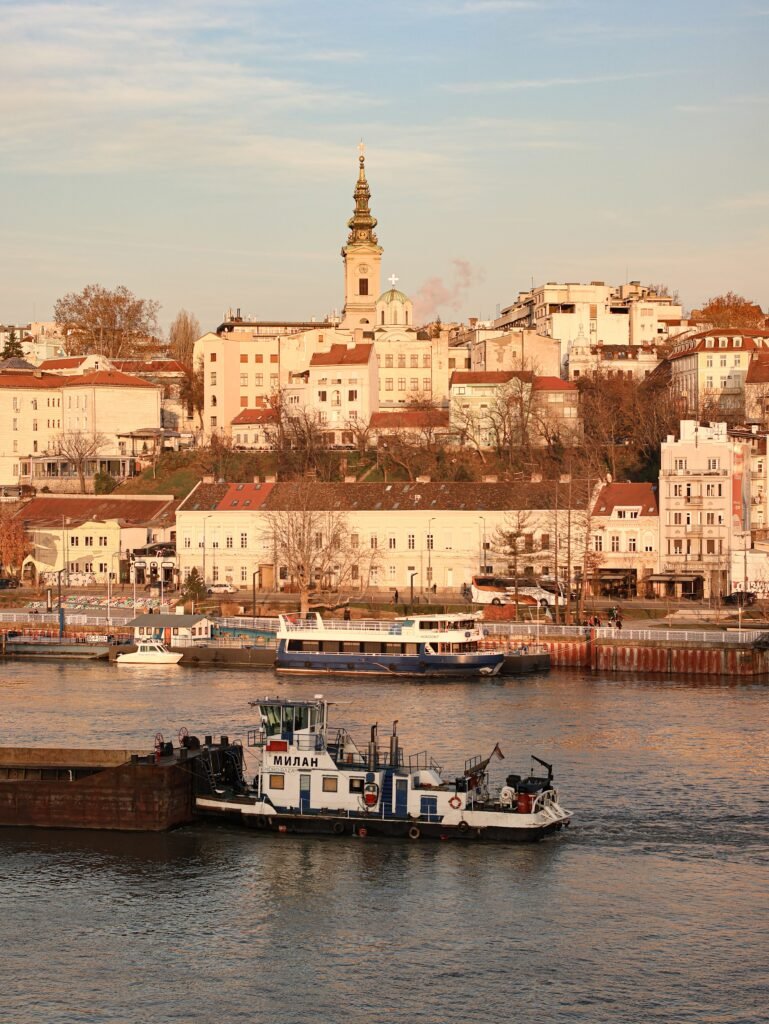
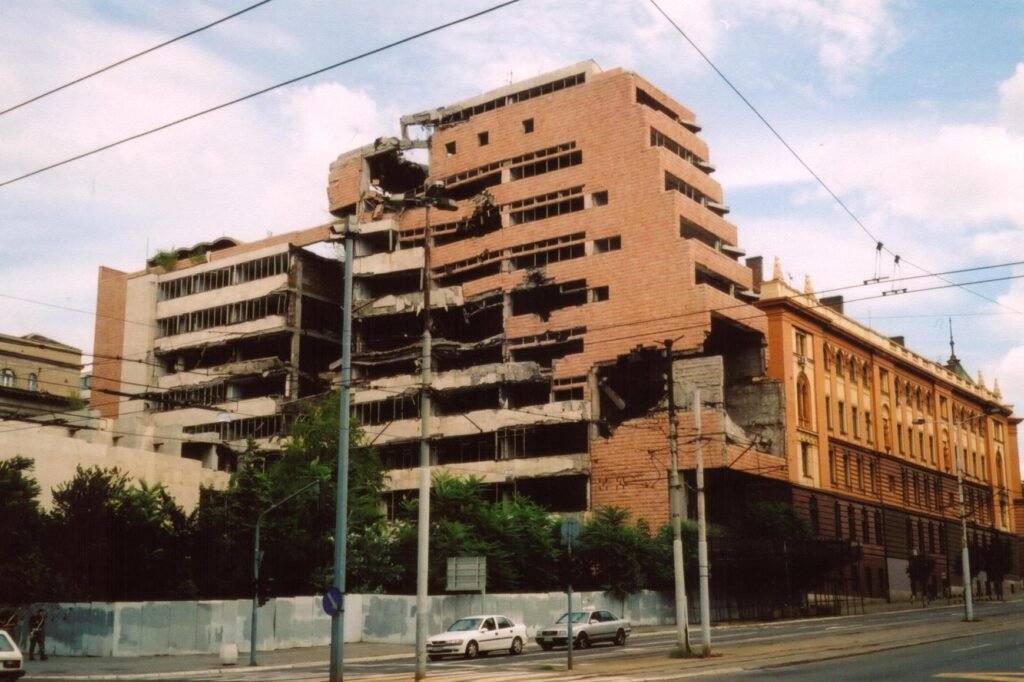
Belgrade, where the Sava embraces the Danube, a capital is told in whispers – and sometimes shouting. A name that carries a promise Beli — white. Grad — city. The white city. Some attribute this nickname to the limestone of the fortress, dazzling under the Serbian sun; others, to the brilliance of the Danube at daybreak. No matter: Bograd carries with it a promise — that of a city that, despite everything it has been through, continues to shine. And she's been through a lot. A story of destruction and rebirth Belgrade didn't just grow. It was built, razed, reconquered, bombed, burned — and rebuilt, again and again. Even before the arrival of the Slavs in the 4th century BC, the Celts had established Singidunum there. The Romans made it a prosperous military camp. With the fall of Rome, waves of invaders followed one another: Huns, Avars, Byzantines, Bulgarians – each empire saw it as a strategic barrier. In the Middle Ages, the city became the capital of the Kingdom of Serbia under Stefan Lazarević, before the Ottoman shadow extended over the Balkans. The Ottomans captured Belgrade in 1521 and remained there, with some Austrian interruptions, until 1867. Three and a half centuries of minarets and hookah cafés. Then came modern Serbia, two world wars – Belgrade was one of the most bombed cities of the 20th century – Tito's Yugoslavia, the disintegration of the 1990s and the NATO strikes in 1999. Each time, the city got back up and reinvented what it wanted to be. Ten secret places where Belgrade really reveals itself Kalemegdan has dominated the confluence of the two rivers for millennia. Its walls bear the scars of at least forty battles; today, they especially invite contemplation, the gaze lost towards Novi Beograd in the amber light of the evening. Topčider Park , long frequented by princes, retains the elegance of times gone by. Its avenues of century-old trees offer a haven of freshness away from the hustle and bustle. The Avala , a gentle mountain a few kilometers from the capital, is the natural escape for Belgraders — deep forests, quiet trails and a panorama encompassing the entire city. Belgrade Waterfront embodies the city of the 21st century: on the banks of the Sava, the slender Kula Beograd has become a new icon, surrounded by cafes and promenades facing the river. The Temple of Saint Sava , with its dazzling whiteness and cetadon green dome, watches over the city from Vračar Hill. The interior dazzles with its golden mosaics — a place where spiritual grandeur speaks for itself. Princess Ljubica's Konak , a 19th-century mansion a stone's throw from the cathedral, immerses the visitor in the beginnings of independent Serbia – refined salons and sculpted furniture at the crossroads of empires. Tašmajdan Park is based on the memory of ancient quarries. A meeting place for families and students, in the evening it takes on an almost theatrical atmosphere under its soft lights. Knez Mihailova Street , an elegant pedestrian artery, connects modern entertainment with period facades. It is here that the pulse of Belgrade is at its most joyful. The National Museum , facing Republic Square, brings together treasures from antiquity to contemporary art — a journey through the layers of Serbian and European culture. Skadarlija , a cobbled and bohemian alley, is the Belgrade Montmartre. In the evening, violins and laughter mingle in a timeless atmosphere that reveals the popular soul of the city. 3 legendary figures who grew up in Belgrade Marina Abramović , born in 1946 into a family of Yugoslav war heroes, drew discipline and rebellion from Belgrade — two sides of the same coin. Before becoming “the grandmother of performance art,” she walked these streets searching for the limits of her own body. In his resistance we read something profoundly Belgrade: this capacity to endure and be reborn. © Francesco Pierantoni / Flickr — CC BY 2.0 Dragoš Kalajić , painter and philosopher born in 1943, is a more secret figure in the Serbian cultural imagination. His monumental paintings, nourished by symbolism and medieval tradition, reflect a complex reflection on European identity. Controversial, unclassifiable, he embodies this intellectual Belgrade which thinks against the world. Mihailo Petrović Alas , a mathematician born in 1868, is perhaps the city's most internationally unknown son — and one of its most brilliant. A student of Henri Poincaré in Paris, founder of the Serbian mathematical school, he published pioneering work in the theory of differential equations. But the Belgraders nicknamed him Alas — the fisherman — because this man navigated between theorems and the Danube with the same quiet grace. The night and the table in Belgrade The Belgrade night begins on the water. Splavovi — pontoon clubs moored on the Sava — mix the informal and the intense, the music rising while the city lights are reflected in the current. On land, Béton Hala offers a cutting-edge electronic scene in an industrial setting; La Fayette maintains a rare musical requirement; Gradska Kafana Club combines tradition and contemporary nightlife. But the real soul of the night is found in Skadarlija, in the kafane where violins play until dawn and the local wine flows without calculation – no dress code, just candles, the smell of toast and voices singing in unison without realizing it. On the dining side, Radnički na Novom Beogradu keeps the secrets of popular Serbian cuisine with generous portions and honest prices. Miris Zavičaja — “the scent of the native country” — offers careful traditional cuisine that crosses regions and seasons. For the morning burek, the Ruža and Tripković bakeries still pass on their know-how without compromise. And Crna Ovca — the Black Sheep — has made ice cream an art in its own right: unexpected flavors, worked textures, unreasonable generosity. Belgrade can be visited as much with the eyes as with the heart. Indomitable and tender at the same time, this city was never made for rushing — any more than

The Vice President of the Federation of Young Serbs of Europe, Stefan Mijailović, recently participated in an inspiring conference dedicated to the future of Europe, which brought together engaged stakeholders from across the continent. Among the attendees was Valérie Hayer, Member of the European Parliament and President of the Renew Europe group, as well as several representatives of the Romanian diaspora. This event, held in the spirit of intercultural dialogue and European cooperation, provided an opportunity to discuss important topics for the future of the European Union. The discussions focused in particular on the upcoming elections in Romania, the strategic role of the country within the European Union, as well as the major political, economic, and social challenges that Europe will face in the coming years. The Vice President emphasized the importance of strengthening ties between European diasporas, which serve as true cultural and diplomatic bridges between peoples. This exchange contributes to a shared vision of a more united, inclusive, and resilient Europe, capable of collectively addressing contemporary challenges such as the green transition, youth mobility, and civic participation. This European conference brought together representatives of the Romanian diaspora, young Europeans, and French citizens around a common goal: building an open, supportive, and future-oriented Europe. It was a powerful moment of cooperation and inspiration, once again demonstrating the commitment of younger generations to the construction of the European project.

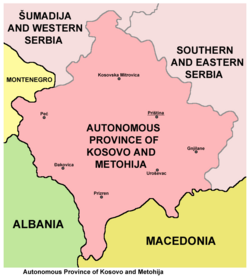
The delegation of the Federation of Young Serbs of Europe (FJSE) met with Mr. Jérôme Bouyjou, Head of the Human Rights Office of UNMIK and representative of the Office of the United Nations High Commissioner for Human Rights (OHCHR) in Kosovo. The discussions focused on the current situation in Kosovo (Resolution 1244), as well as issues related to the respect of fundamental human rights, particularly the rights of the Serbian community.
Article passivization Download