
Prominent Serbian Scientists and Entrepreneurs Who Marked History
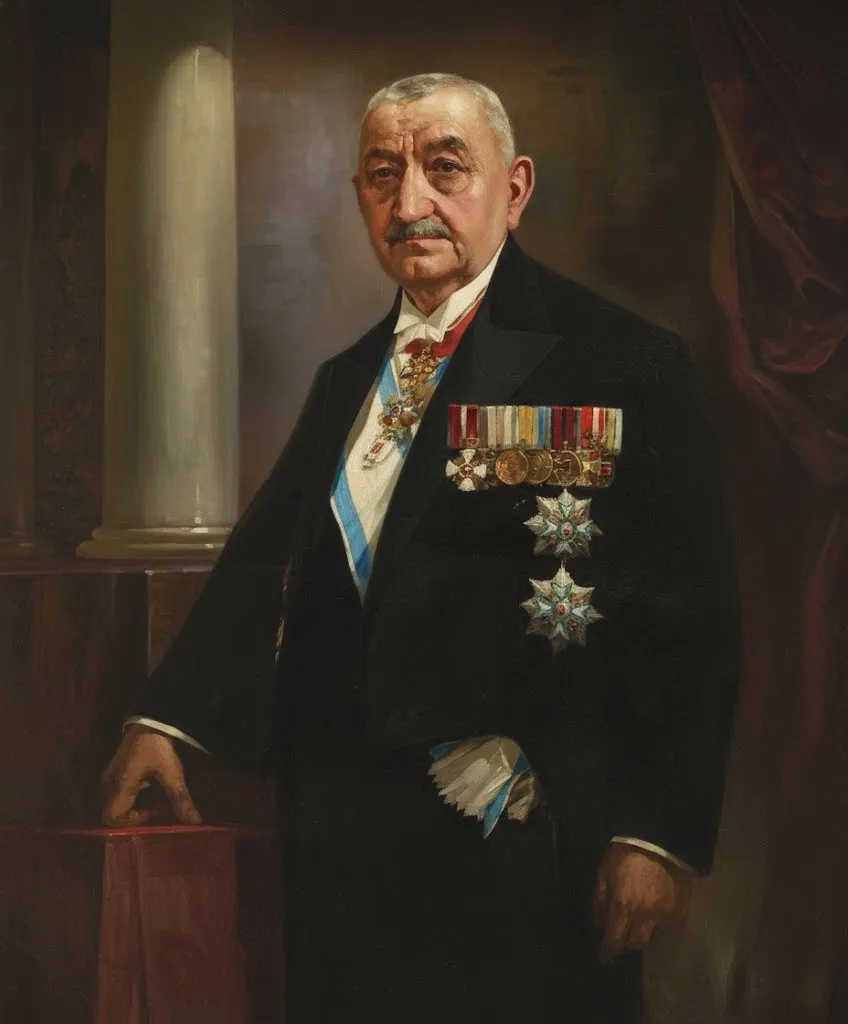
When the topic of important Serbs who have improved not only Serbia but also the world is mentioned, most of us only think of "big names" such as Nikola Tesla, Milutin Milanković or Mihajlo Pupin. Although it is inevitable that these people deserved to be remembered as the greatest minds of our country, Serbia can be proud of many more personalities who left their mark in the field of science and economy . So that their contribution would not be forgotten, here we will look back at the life and work of six lesser-known, but no less important, Serbian personalities. Text author: Dunja Brašanac Nikola Spasic Nikola Spasić (1838–1916) was a Belgrade merchant and one of the greatest Serbian benefactors. He was also the president of the Belgrade Stock Exchange, the president of the Traffic Bank, as well as a member of the Board of Directors of the National Bank of the Kingdom of Serbia. He acquired his wealth through trade, starting with the opancar trade, and later became one of the most successful traders in Belgrade. He left most of his wealth through the Nikola Spasić Endowment, which financed the construction and equipping of hospitals, homes for the elderly and other institutions. At the beginning of the First World War, his wife Anastasija Naka Spasić proposed to financially help the injured Serbian soldiers, with which Spasić established his first endowment, handing over his property to the Serbian National Invalid Fund St. Đorđe. It is particularly significant that his endowment financed the construction of the City Hospital in Zvezdara, and later continued to finance medical equipment for hospitals and to reward students of the Faculty of Medicine and Agriculture at the University of Belgrade. During the Balkan Wars, Spasić even organized a hospital for wounded soldiers at his own expense, and after the war he donated the equipment to the Serbian Red Cross. In addition to the construction of a hospital in Belgrade, after his death, the Endowment of Nikola Spasić also financed hospitals in Kumanovo and Krupanj, as well as a Home for exhausted citizens in Knjaževac . The endowment also invested in education, financing the work of schools, helping students and awarding prizes to the best students. It is particularly interesting that she financed the establishment of orchards and vineyards, and some grape varieties were introduced to Serbia for the first time thanks to her support. Spasić's example is specific in that he turned a huge private fortune into a lasting benefit for health and society, and it is interesting to note that his endowment in 1939 had three percent more capital than Nobel's. Spasić died in 1916 in Corfu, after the Serbian people were drafted into the army during the First World War. For his contributions to society, Spasić was awarded the Takovski Cross of the fourth order, as well as the Order of Saint Sava of the third order. Jovan Karamata Jovan Karamata (1902–1967) was one of the most important Serbian mathematicians of the 20th century. He was born in Zagreb, but he grew up in Zemun and spent most of his academic career in Belgrade and Geneva. He finished college in Belgrade, where he received his doctorate from professor Mihail Petrović Alas, another of our greatest mathematicians. His most important contribution to mathematics was the theory of regularly varying functions , which he developed in the early 1930s, publishing it in the paper "Sur une mode de croissance régulaire des fonctions". This theory allows mathematicians to precisely study the behavior of functions when their values become very large or small, and today has applications in number theory, probability, statistics and other areas of mathematics. His work was so significant that today this field is often referred to as Karamata theory. In addition to the theory of regularly varying functions, Karamata published two papers in 1930 that became particularly important for his international reputation. In the paper "Über die Hardy-Littlewoodsche Umkehrungen des Abelschen Stätigkeitssatzes" he gave an extremely short, only two-page long proof of the important Hardy-Littlewood theorem. His proof was so influential that it was later included among the fifty most important papers published in the Mathematische Zeitschrift during the first sixty years of its publication. Karamata also worked on Tauber's theorems, Fourier analysis, analytical number theory, theory of complex functions and differential equations . During his career, he published about 120 scientific papers and 15 books, leaving a lasting contribution to mathematics. In addition to his own scientific results, he had a great influence on the development of Serbian mathematics through the generations of mathematicians he educated during his work as a professor at the University of Belgrade from 1930 to 1950. In this period, in 1939, Karamata became a member of the Serbian Academy of Sciences and Arts (SANU), which organized the opening of his memorial plaque in Zemun in 2008. Dimitrije Teokarevic Dimitrije Mita Teokarević (1850–1931) was a merchant and industrialist from Leskovac and one of the pioneers of the Serbian textile industry. He was born into a poor family and started working as a servant at the age of nine, and as a young man he was illiterate. Later, he starts working as a cook and finishes school in order to improve his financial situation. In 1884, he participated in the establishment of the first cord factory in Leskovac, in the village of Strojkovac, which laid one of the foundations for the later development of Leskovac as an industrial center. The factory produced cord, then a highly sought-after decorative material for folk costumes, and in 1896 Teokarević participated in the founding of the first woolen fabric factory in Leskovac. In addition to being an entrepreneur, Teokarević was also involved in politics, considering that he was also a member of parliament, as well as the president of the Municipality of Leskovac. Teokarević later expanded his business with his sons to the production of woolen fabrics. In 1920, the family started building a large industrial enterprise for wool processing in