When the topic of important Serbs who have improved not only Serbia but also the world is mentioned, most of us only think of "big names" such as Nikola Tesla, Milutin Milanković or Mihajlo Pupin. Although it is inevitable that these people deserved to be remembered as the greatest minds of our country, Serbia can be proud of many more personalities who left their mark in the field of science and economy . So that their contribution would not be forgotten, here we will look back at the life and work of six lesser-known, but no less important, Serbian personalities.
Text author: Dunja Brašanac
Nikola Spasic
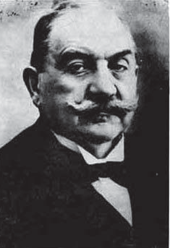
Nikola Spasić (1838–1916) was a Belgrade merchant and one of the greatest Serbian benefactors. He was also the president of the Belgrade Stock Exchange, the president of the Traffic Bank, as well as a member of the Board of Directors of the National Bank of the Kingdom of Serbia. He acquired his wealth through trade, starting with the opancar trade, and later became one of the most successful traders in Belgrade. He left most of his wealth through the Nikola Spasić Endowment, which financed the construction and equipping of hospitals, homes for the elderly and other institutions. At the beginning of the First World War, his wife Anastasija Naka Spasić proposed to financially help the injured Serbian soldiers, with which Spasić established his first endowment, handing over his property to the Serbian National Invalid Fund St. Đorđe.
It is particularly significant that his endowment financed the construction of the City Hospital in Zvezdara, and later continued to finance medical equipment for hospitals and to reward students of the Faculty of Medicine and Agriculture at the University of Belgrade. During the Balkan Wars, Spasić even organized a hospital for wounded soldiers at his own expense, and after the war he donated the equipment to the Serbian Red Cross. In addition to the construction of a hospital in Belgrade, after his death, the Endowment of Nikola Spasić also financed hospitals in Kumanovo and Krupanj, as well as a Home for exhausted citizens in Knjaževac . The endowment also invested in education, financing the work of schools, helping students and awarding prizes to the best students. It is particularly interesting that she financed the establishment of orchards and vineyards, and some grape varieties were introduced to Serbia for the first time thanks to her support.
Spasić's example is specific in that he turned a huge private fortune into a lasting benefit for health and society, and it is interesting to note that his endowment in 1939 had three percent more capital than Nobel's. Spasić died in 1916 in Corfu, after the Serbian people were drafted into the army during the First World War. For his contributions to society, Spasić was awarded the Takovski Cross of the fourth order, as well as the Order of Saint Sava of the third order.
Jovan Karamata
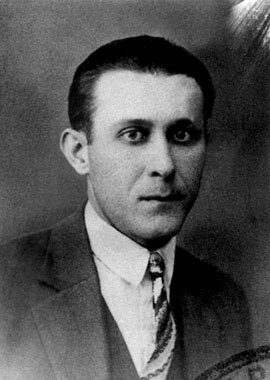
Jovan Karamata (1902–1967) was one of the most important Serbian mathematicians of the 20th century. He was born in Zagreb, but he grew up in Zemun and spent most of his academic career in Belgrade and Geneva. He finished college in Belgrade, where he received his doctorate from professor Mihail Petrović Alas, another of our greatest mathematicians.
His most important contribution to mathematics was the theory of regularly varying functions , which he developed in the early 1930s, publishing it in the paper "Sur une mode de croissance régulaire des fonctions". This theory allows mathematicians to precisely study the behavior of functions when their values become very large or small, and today has applications in number theory, probability, statistics and other areas of mathematics. His work was so significant that today this field is often referred to as Karamata theory.
In addition to the theory of regularly varying functions, Karamata published two papers in 1930 that became particularly important for his international reputation. In the paper "Über die Hardy-Littlewoodsche Umkehrungen des Abelschen Stätigkeitssatzes" he gave an extremely short, only two-page long proof of the important Hardy-Littlewood theorem. His proof was so influential that it was later included among the fifty most important papers published in the Mathematische Zeitschrift during the first sixty years of its publication. Karamata also worked on Tauber's theorems, Fourier analysis, analytical number theory, theory of complex functions and differential equations . During his career, he published about 120 scientific papers and 15 books, leaving a lasting contribution to mathematics. In addition to his own scientific results, he had a great influence on the development of Serbian mathematics through the generations of mathematicians he educated during his work as a professor at the University of Belgrade from 1930 to 1950. In this period, in 1939, Karamata became a member of the Serbian Academy of Sciences and Arts (SANU), which organized the opening of his memorial plaque in Zemun in 2008.
Dimitrije Teokarevic
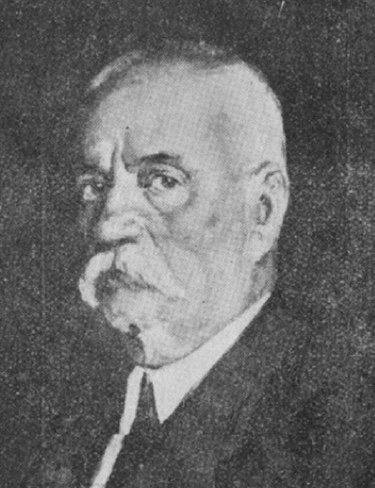
Dimitrije Mita Teokarević (1850–1931) was a merchant and industrialist from Leskovac and one of the pioneers of the Serbian textile industry. He was born into a poor family and started working as a servant at the age of nine, and as a young man he was illiterate. Later, he starts working as a cook and finishes school in order to improve his financial situation. In 1884, he participated in the establishment of the first cord factory in Leskovac, in the village of Strojkovac, which laid one of the foundations for the later development of Leskovac as an industrial center. The factory produced cord, then a highly sought-after decorative material for folk costumes, and in 1896 Teokarević participated in the founding of the first woolen fabric factory in Leskovac. In addition to being an entrepreneur, Teokarević was also involved in politics, considering that he was also a member of parliament, as well as the president of the Municipality of Leskovac.
Teokarević later expanded his business with his sons to the production of woolen fabrics. In 1920, the family started building a large industrial enterprise for wool processing in Paraćin, to which during the next fifteen months about twenty tons of machines from Germany, Belgium, Poland and Austria were delivered. His work thus did not stop at the establishment of one factory, but represented the beginning of a wider industrial system of the Teokarević family, which later included Paraćin and Vučje. With this, the Teokarevic family played an important role in the development of the Yugoslav textile industry, contributing to the wider economy of the country.
After his death, his widow Vasilija Vana Teokarević built the Church of the Birth of St. John the Baptist in Vučje as a sign of her husband's lasting memory.
Pavle Savić
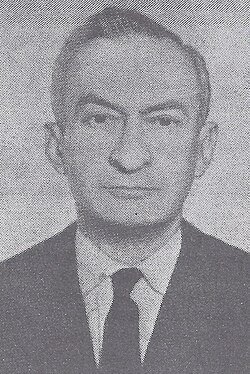
Pavle Savić (1909–1994) was born in Thessaloniki and educated in Serbia, where he completed his studies in physical chemistry at the University of Belgrade. His international career began in Paris, where he worked with Irene Joliot-Curie, a Nobel Prize winner, on research into the radioactivity produced by neutron bombardment of uranium. Their research led to results that were key to understanding nuclear fission. Although the Nobel Prize for the discovery of nuclear fission in 1944 went to Otto Hahn, Savić's work with Joliot-Ciri was an important part of the research that preceded that discovery.
In addition to nuclear fission research, Savić also studied the behavior of matter under very high pressures. In the sixties, together with the physicist Radivoj Kašanin, he developed the so-called semi-classical theory of dense matter, which was used to study the properties of materials at extreme pressures, but also for problems in astrophysics, such as the structure of the interior of the planets and the origin of the rotation of celestial bodies. This part of his work shows that his research later expanded from nuclear physics to problems connecting material physics and astrophysics.
After the Second World War, he returned to Yugoslavia and founded the scientific institute "Vinča" in 1948, which deals with the fields of physics, chemistry and biology. Savić designed and supervised the construction of the first laboratories and worked on equipping them with scientific instruments, some of which were obtained through war reparations. At the same time, he gathered young scientists from various fields in the institute, creating one of the first major multidisciplinary research environments in post-war Yugoslavia. Before founding "Vinča", Savić also worked in Petr Kapica's laboratory in Moscow, where he was involved in physics research at very low temperatures. Later, as a professor at the University of Belgrade, he continued to deal with physical chemistry and physics, and from 1971 to 1981 he was the president of the Serbian Academy of Sciences and Arts (SANU).
Luka Ćelović
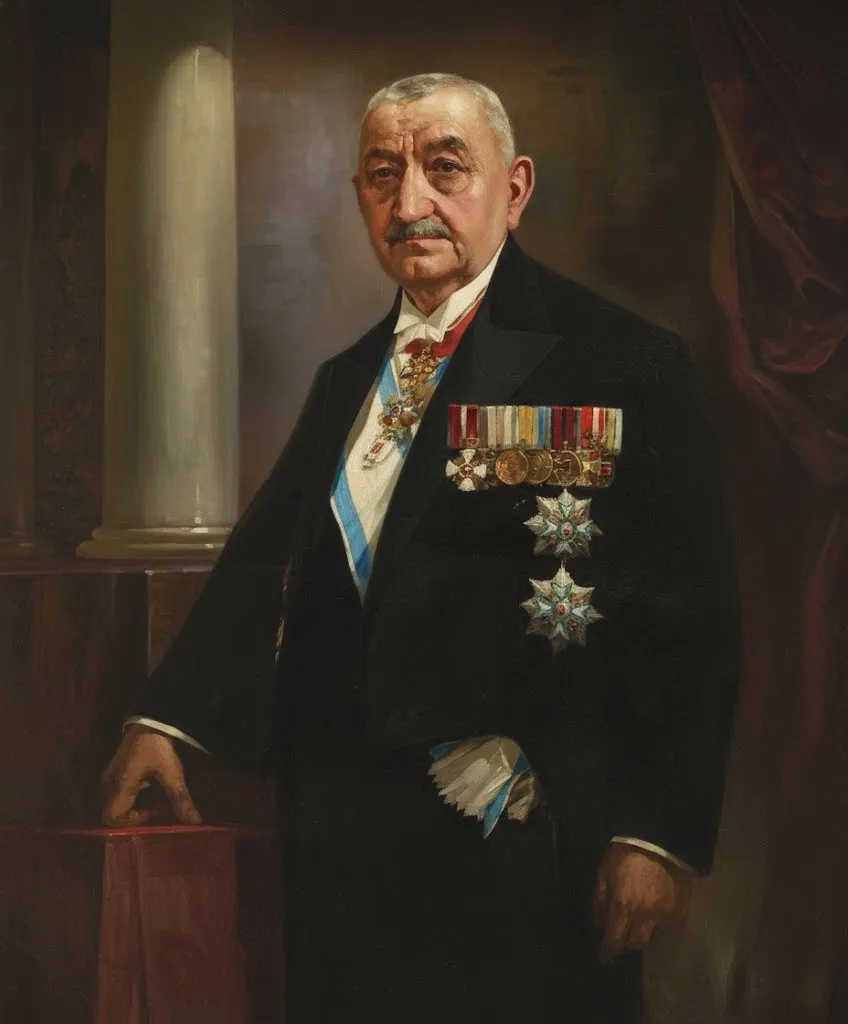
Luka Ćelović Trebinjac (1854–1929) was born in Pridvorci near Trebinje, and as a young man he came to Belgrade, where he started as a merchant and eventually became one of the richest people in Serbia. He was one of the important people in the development of the Belgrade cooperative, and he gained his wealth primarily through trade and real estate investment. However, his greatest contribution was not business, but educational, given that he left almost all of his wealth to the University of Belgrade. The endowment of Luka Ćelović not only provided money to the University, but directly financed specific scientific and educational activities. From its funds, scientific equipment was purchased, so, among other things, the Mineralogical and Metrographic Institute was allocated 10,000 dinars for the purchase of a special microscope, while the Zootechnical Institute was enabled to purchase a camera for photomicroscopic imaging. The endowment also financed the purchase of instruments for the Biological Station in Ohrid, as well as the University Library's subscription to scientific journals. In 1934, 268,050 dinars were set aside for publishing activities alone.
A particularly important part of her work was directly helping scientists and students. The funds of the Endowment were used to print scientific studies and university textbooks, but also to finance professors' trips to international congresses, symposiums and research work in foreign libraries and archives. At the beginning of the school year 1939/40. In 1940/41, a special fund was established at the University of Belgrade for the printing of university textbooks and original scientific works. 11 textbooks were already printed from his funds.
During his lifetime, Ćelović also helped student organizations, such as He left a total of 200,000 dinars in state bonds to the Academic Singing Society "Obilić". As the president of the Belgrade cooperative, he gave up his own fee, which he kept as a fund to help others. Part of that money was used to help blind homes in Zemun and Inđija and to protect blind girls in Belgrade.
The Luka Ćelović Foundation is active to this day. It is particularly interesting that Ćelović had a very modest formal education, but he decided to invest his enormous wealth precisely in the development of higher education and science in Serbia. However, his contribution to the development of Belgrade was not limited to the later endowment. As one of the founders of the Belgrade Cooperative, and then its president from 1887 until his death, he participated in the development of the institution that provided more favorable loans to merchants, artisans and officials. The cooperative later developed an insurance department, helped establish the Serbian Shipping Company and a slaughterhouse, and gave loans even to the Belgrade municipality and the state.
Good Christmas