The ICJ advisory opinion on the declaration of independence of Kosovo* – Nikola Dimitrijevic
FINAL ICJ REPORT Download
FINAL ICJ REPORT Download
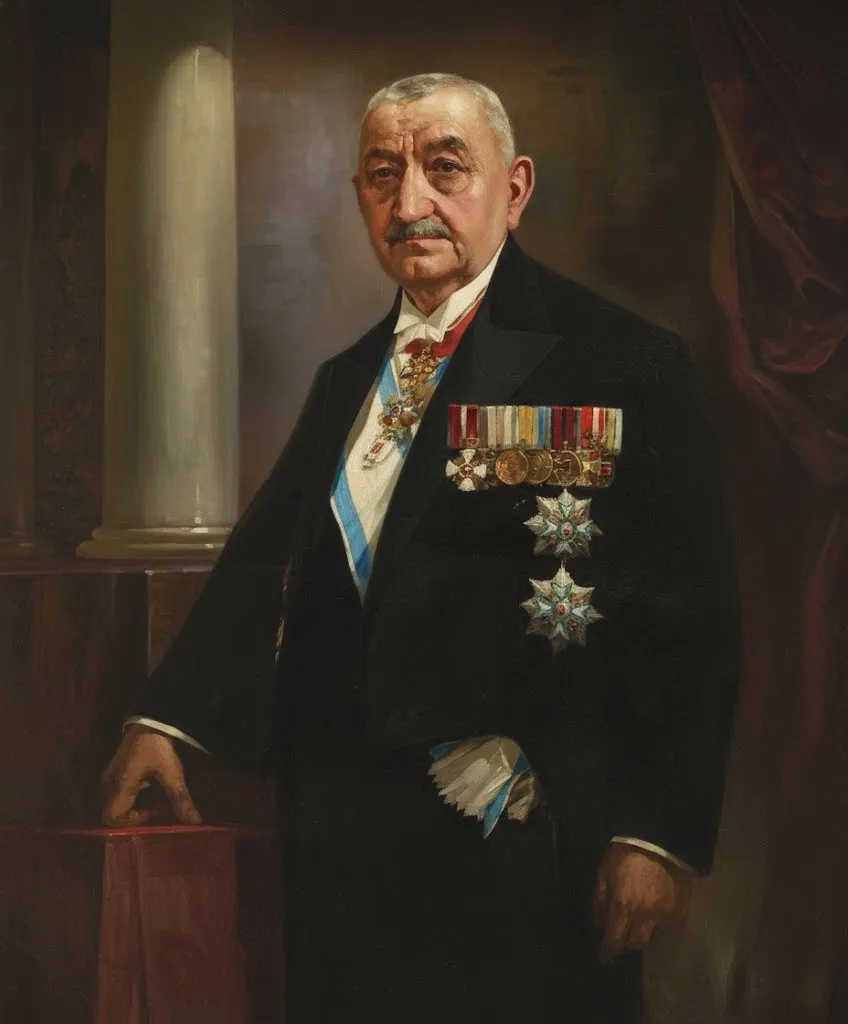
When the topic of important Serbs who have improved not only Serbia but also the world is mentioned, most of us only think of "big names" such as Nikola Tesla, Milutin Milanković or Mihajlo Pupin. Although it is inevitable that these people deserved to be remembered as the greatest minds of our country, Serbia can be proud of many more personalities who left their mark in the field of science and economy . So that their contribution would not be forgotten, here we will look back at the life and work of six lesser-known, but no less important, Serbian personalities. Text author: Dunja Brašanac Nikola Spasic Nikola Spasić (1838–1916) was a Belgrade merchant and one of the greatest Serbian benefactors. He was also the president of the Belgrade Stock Exchange, the president of the Traffic Bank, as well as a member of the Board of Directors of the National Bank of the Kingdom of Serbia. He acquired his wealth through trade, starting with the opancar trade, and later became one of the most successful traders in Belgrade. He left most of his wealth through the Nikola Spasić Endowment, which financed the construction and equipping of hospitals, homes for the elderly and other institutions. At the beginning of the First World War, his wife Anastasija Naka Spasić proposed to financially help the injured Serbian soldiers, with which Spasić established his first endowment, handing over his property to the Serbian National Invalid Fund St. Đorđe. It is particularly significant that his endowment financed the construction of the City Hospital in Zvezdara, and later continued to finance medical equipment for hospitals and to reward students of the Faculty of Medicine and Agriculture at the University of Belgrade. During the Balkan Wars, Spasić even organized a hospital for wounded soldiers at his own expense, and after the war he donated the equipment to the Serbian Red Cross. In addition to the construction of a hospital in Belgrade, after his death, the Endowment of Nikola Spasić also financed hospitals in Kumanovo and Krupanj, as well as a Home for exhausted citizens in Knjaževac . The endowment also invested in education, financing the work of schools, helping students and awarding prizes to the best students. It is particularly interesting that she financed the establishment of orchards and vineyards, and some grape varieties were introduced to Serbia for the first time thanks to her support. Spasić's example is specific in that he turned a huge private fortune into a lasting benefit for health and society, and it is interesting to note that his endowment in 1939 had three percent more capital than Nobel's. Spasić died in 1916 in Corfu, after the Serbian people were drafted into the army during the First World War. For his contributions to society, Spasić was awarded the Takovski Cross of the fourth order, as well as the Order of Saint Sava of the third order. Jovan Karamata Jovan Karamata (1902–1967) was one of the most important Serbian mathematicians of the 20th century. He was born in Zagreb, but he grew up in Zemun and spent most of his academic career in Belgrade and Geneva. He finished college in Belgrade, where he received his doctorate from professor Mihail Petrović Alas, another of our greatest mathematicians. His most important contribution to mathematics was the theory of regularly varying functions , which he developed in the early 1930s, publishing it in the paper "Sur une mode de croissance régulaire des fonctions". This theory allows mathematicians to precisely study the behavior of functions when their values become very large or small, and today has applications in number theory, probability, statistics and other areas of mathematics. His work was so significant that today this field is often referred to as Karamata theory. In addition to the theory of regularly varying functions, Karamata published two papers in 1930 that became particularly important for his international reputation. In the paper "Über die Hardy-Littlewoodsche Umkehrungen des Abelschen Stätigkeitssatzes" he gave an extremely short, only two-page long proof of the important Hardy-Littlewood theorem. His proof was so influential that it was later included among the fifty most important papers published in the Mathematische Zeitschrift during the first sixty years of its publication. Karamata also worked on Tauber's theorems, Fourier analysis, analytical number theory, theory of complex functions and differential equations . During his career, he published about 120 scientific papers and 15 books, leaving a lasting contribution to mathematics. In addition to his own scientific results, he had a great influence on the development of Serbian mathematics through the generations of mathematicians he educated during his work as a professor at the University of Belgrade from 1930 to 1950. In this period, in 1939, Karamata became a member of the Serbian Academy of Sciences and Arts (SANU), which organized the opening of his memorial plaque in Zemun in 2008. Dimitrije Teokarevic Dimitrije Mita Teokarević (1850–1931) was a merchant and industrialist from Leskovac and one of the pioneers of the Serbian textile industry. He was born into a poor family and started working as a servant at the age of nine, and as a young man he was illiterate. Later, he starts working as a cook and finishes school in order to improve his financial situation. In 1884, he participated in the establishment of the first cord factory in Leskovac, in the village of Strojkovac, which laid one of the foundations for the later development of Leskovac as an industrial center. The factory produced cord, then a highly sought-after decorative material for folk costumes, and in 1896 Teokarević participated in the founding of the first woolen fabric factory in Leskovac. In addition to being an entrepreneur, Teokarević was also involved in politics, considering that he was also a member of parliament, as well as the president of the Municipality of Leskovac. Teokarević later expanded his business with his sons to the production of woolen fabrics. In 1920, the family started building a large industrial enterprise for wool processing in
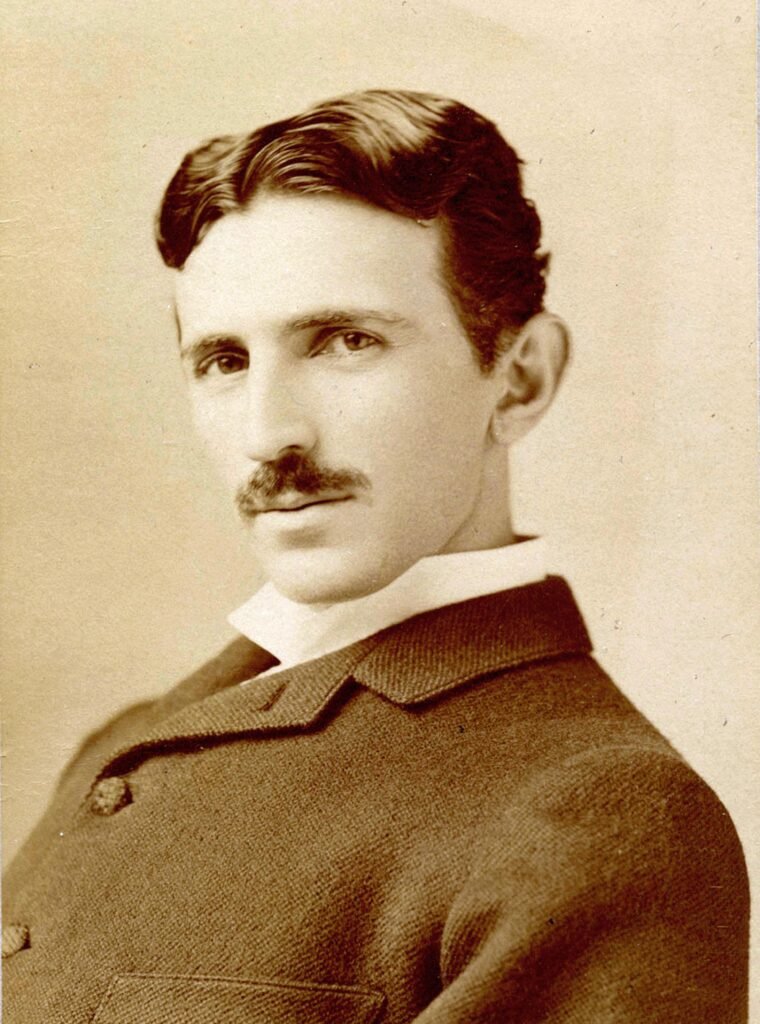
Nikola Tesla was born on 10 July 1856 in Smiljan, in what is today Croatia, then part of the Austro-Hungarian Empire. Of Serbian origin, he grew up in an educated family: his father, an Orthodox priest, was also a writer, while his mother, who was self-taught, was known for her remarkable talent for inventing and making household tools. Scientific Beginnings Tesla studied electrical engineering in Austria, then worked in Europe before moving to the United States in 1884. Upon his arrival, he briefly collaborated with Thomas Edison, but their differing scientific visions quickly led to a split. Tesla is mainly recognised for promoting the use of alternating current (AC), which he considered far more efficient than the direct current (DC) defended by Edison. In partnership with the industrialist George Westinghouse, he contributed to the construction of the first major hydroelectric power station at Niagara Falls, based on his AC technology. A visionary inventor During his lifetime, Tesla filed around 300 patents covering nearly 125 inventions, several of which were unfairly attributed to Edison. He developed new approaches to energy conversion and remains considered one of the most brilliant and creative engineers of the late nineteenth and early twentieth centuries. However, Tesla preferred to see himself not as an inventor, but as a “discoverer”. Always ahead of his time, Tesla conceived ideas that seemed impossible in his era, such as the wireless transmission of energy over long distances. To this end, he began the construction of a monumental tower: the Wardenclyffe Tower, built between 1901 and 1917 on Long Island, near New York. This ambitious project, intended to enable telephony, transatlantic wireless broadcasting, and energy transmission, was abandoned due to a lack of funding. Tesla had also anticipated applications remarkably close to modern technologies such as the fax machine, geolocation, clock synchronisation, and the radio broadcasting of music and information — at a time when these concepts did not yet even exist. End of Life and Posthumous Recognition Nikola Tesla died on 7 January 1943, at the age of 86. He died alone in his hotel room, room 3327 at the New Yorker Hotel in New York, probably as a result of coronary thrombosis, or a heart attack. Today, Nikola Tesla is celebrated as a genius ahead of his time, whose work profoundly shaped the modern world. The unit of measurement for magnetic field strength is named after him, the tesla, and the famous company Tesla, Inc., founded by Elon Musk, pays tribute to him. Sources: https://fr.wikipedia.org/wiki/Nikola_Tesla https://www.nikolateslalegend.com/ By Napoleon Sarony — Marc Seifer Archive, Public Domain, https://commons.wikimedia.org/w/index.php?curid=30659157
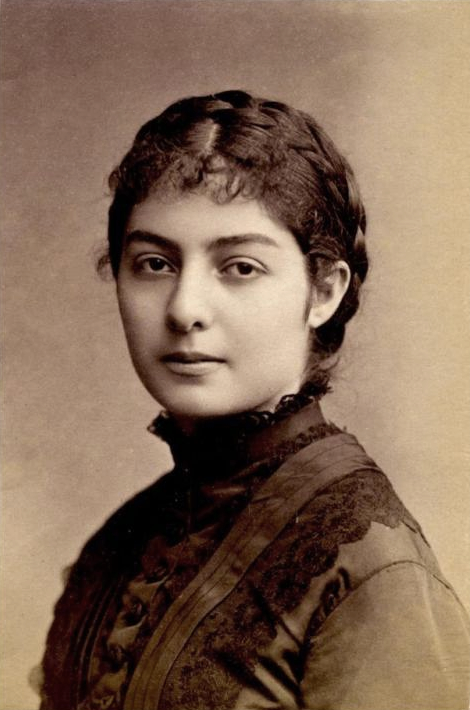
From Florence to Belgrade : the turbulent life of Natalija Obrenović Natalija Obrenović, born Natalia Keșco in 1859 in Florence, was Queen Consort of Serbia from 1882 to 1889 alongside her husband, King Milan I Obrenović. Born into the Moldavian nobility, she experienced a youth marked by the loss of her parents and was educated under the care of her uncle. Her marriage to Milan was soon troubled by marital tensions and political differences: while Milan grew closer to Austria-Hungary, Natalija supported Russia. Their relationship deteriorated to the point that Natalija left the country in 1887 with their son, Aleksandar. Their divorce was granted and later annulled, and in 1889 Milan abdicated in favour of Aleksandar, briefly making Natalija regent of the kingdom. The light of an engagement ! After her forced exile and temporary return to Belgrade, Natalija was permanently banished in 1900 for opposing her son’s marriage to Draga Mašin. In 1903, Aleksandar and Draga were assassinated during a coup d’état, bringing the Obrenović dynasty to an end. As the last representative of this lineage, Natalija withdrew to France, converted to Catholicism, and entered religious life. She devoted her life to charitable work, supporting war-wounded soldiers and women’s education, while also acting as a patron of artists and intellectuals. She died in 1941 in Saint-Denis and was buried in the old cemetery of Lardy, leaving behind an important cultural and philanthropic legacy. The FYSE pays tribute to Natalija Obrenović On 4 May, in the presence of Mrs Anđelka Šimišić, Consul of the Republic of Serbia, we laid wreaths to mark the 84th anniversary of the death of Queen Natalija Obrenović. Although she lived for many years far from Serbia, Queen Natalija never forgot her homeland, which she loved deeply. Through her generous bequests, she left a lasting mark, particularly through her support for the University of Belgrade and the Serbian people as a whole. Sadly, her grave remained forgotten for many years. Through this gesture, we pay tribute to her unwavering commitment to Serbia. The ceremony took place in the presence of Mr Dragan Lernić, president of the organisation “Vivre Ensemble”. Sources: Par unattributed — photovintagefrance, Public domaine, https://commons.wikimedia.org/w/index.php?curid=15769995 https://fr.wikipedia.org/wiki/Natalija_Obrenovi%C4%87

Imagine an artist whose brushstrokes succeeded in bringing history back to life, whose paintings became symbols of national pride, and whose art crossed borders and eras. Such was Paja Jovanović — a painter who brought Serbian culture and tradition onto the European artistic stage, leaving behind masterpieces that continue to inspire us today. His works are not merely paintings, but visual narratives that speak of heroes, customs, and the spirit of the age. Paja Jovanović was not only an artist — he was the chronicler of a people, a visionary, and an ambassador of beauty. Childhood and Education Paja Jovanović was born on 16 June 1859 in Vršac, into a family of craftsmen. His first contact with art came from the atmosphere of his home, but from a very young age he showed a talent for drawing. His father, Stevan Jovanović, was a well-known photographer in Vršac. This allowed him to come into contact with photography, and more generally with art, from childhood. His mother was named Ernestina, née Doet, and was of French origin. Paja had five brothers and one sister, and was always surrounded by the warmth of a large family. From an early age, he showed an interest in art, especially thanks to his father, since working in photography at that time required not only technical knowledge, but also a skilled hand for retouching images. In Vršac, he also had the opportunity to be around great painters such as Arsenije Arsa Todorović, Pavel Đurković, and Jovan Popović. To support his interest in art, his father sent him to Belgrade, where Paja had the opportunity to develop in a cultural and intellectual environment. This is how Paja Jovanović began to draw, at first secretly, copying religious images and spending hours in an empty church, which he considered his first teacher. However, when the parish of Vršac decided to order new bells for the cathedral and drawings of saints were needed — copies of the icons from the church in Vršac, from which reliefs would later be made on the bells in Vienna — his talent was discovered. At the age of fourteen, Jovanović received his first commission and, thanks to much praise, gained a kind of passport to Vienna and the possibility of entering the Academy of Fine Arts. At a very young age, he showed exceptional ability in the visual arts, and his parents therefore decided to enrol him at the School of Arts and Crafts in Belgrade. There, he received a basic artistic education, learning to draw, paint, and master fundamental techniques. In April 1877, he enrolled in a general painting course at the Academy of Fine Arts in Vienna, and by October of the same year he had become a regular student at the academy, studying under the highly respected professor and skilled teacher Christian Griepenkerl (1839–1916). He completed his regular painting studies in three years, on 21 July 1880, but continued his training under the same professor in a special course devoted to historical painting. At the same time, he further developed his skills in the master class of Professor Leopold Karl Müller (1834–1892), a painter who was highly sought after and praised at the time for his historical and genre painting, especially his works with Oriental themes, particularly scenes from Egypt. Jovanović soon became his best student. Although he was influenced by academicism, Paja Jovanović’s training in Vienna also exposed him to other artistic movements, such as Romanticism and Realism, which would later influence his work. In addition, his time in Vienna allowed him to develop a deep understanding of art and to master painting techniques, particularly in the context of historical compositions and portraiture. Voyages Paja travelled widely around the world, observing landscapes, peoples, and cultures that he later transferred into his paintings. His professor at the Academy of Fine Arts in Vienna advised him to visit his region of origin, where he could paint a large number of Oriental motifs. Paja therefore travelled through Serbia, Montenegro, Bosnia, and Albania, painting scenes of everyday life. Enriched by these impressions, he went on to paint many genre scenes, including The Wounded Montenegrin, The Duel, The Epic Singer, The Bride’s Adornment, In Ambush, The Albanian, The Arnaut with a Chibouk, The Traitor, Blood Feud, and The Cockfight. These works attracted attention in nineteenth-century Europe, at a time when Europe was highly interested in events in the Balkans. His first recognition came in 1882, during his studies in Vienna, for his painting The Wounded Montenegrin. This painting was exhibited at the Academy’s annual exhibition and won him first prize as well as an imperial scholarship. The following year, he signed a ten-year contract with the famous gallery owner Valis for the French Gallery in London and, at the end of 1883, moved there to live and work. His works sold very well, which freed him completely from financial worries and allowed him to travel frequently to distant and expensive destinations, including North Africa, Morocco and Egypt, as well as Greece, Turkey, Italy, and Spain. With his friend, the Russian painter Franz Roubaud, he spent six months in the Caucasus. Shortly afterwards, he left London and moved to Munich, then to Paris, before returning to Vienna. Borba petlova Kićenje neveste Odmor Bošibozuka Relations with France Paja Jovanović maintained a deep and meaningful relationship with France throughout his artistic development and career. After his studies in Vienna, where he acquired his basic artistic skills, Paja travelled to Paris, then the artistic centre of the world, to further refine his craft. There, he was influenced by French academicism and realism, which helped shape his work. In Paris, he studied the works of great masters such as Eugène Delacroix and Gustave Courbet, who helped him develop his technique and his approach to historical