


Open Letter
Lorem ipsum dolor sit amet, consectetur adipiscing elit. Ut elit tellus, luctus nec ullamcorper mattis, pulvinar dapibus leo.
Identity: False Concept or Reality?
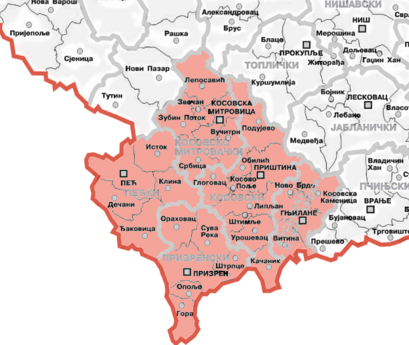
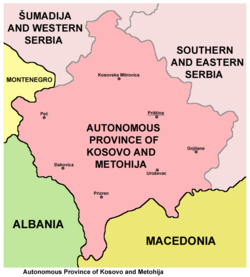
From Renan to Kosovo, a reflection on what unites us. Driven by a navy-blue electoral wave, the question of identity has imposed itself on all political debates in Europe. This notion, used indiscriminately and often imprecisely, has sparked major controversy, largely because it has never been clearly defined. During the first Congress of Serbian Youth, organised in Vienna on 7 June 2025, the debate among those present had only just begun, with the aim of determining a strategy for the development of Serbian diaspora organisations. However, the discussion quickly turned into a reflection on what it truly means to be Serbian. Very different ideas immediately emerged, revealing just how difficult it is to define identity. This shift in the debate towards such a vast and unresolved question points to a broader problem: can collective identity still be defined in a clear and shared way? And if not, what is the point of discussing it? The issue of identity remains unresolved. Yet, as with “wokism”, its use in public debate should have allowed for a clear definition. We might therefore have thought that the lack of agreement on the definition of identity explains the divergences over what it means to be a member of a nation. The truth is that agreement on the definition remains impossible: the Congress alone could not resolve a debate that is several centuries old. Identity is defined by the CNRTL as the “character of that which, under different names or aspects, is one, or represents one and the same reality”. It therefore seems to be closely linked to the notion of the nation, which is also at the heart of our political debates. It might therefore have been more useful to speak of national identity, in order to avoid any confusion with individual identity. The question of the nation has been at the centre of a deep philosophical reflection, one that is worth addressing in order to understand that the debate which took place at the Congress in Vienna is certainly legitimate, but endless. Yet the endless is abstract and exceeds our rationality: the debate therefore seems vain and useless. The very idea of the nation has divided European societies, sometimes even neighbouring ones. Thus, when Prussia collapsed following Napoleon’s takeover of its territory, Fichte, in Addresses to the German Nation (1808), called for a spiritual and moral rebirth of the German people by awakening their national consciousness. For him, the nation refers to a community of language and culture, not a legal-political creation. It precedes the state, which merely serves it. The people are united by language, education, and culture. Later, Renan would develop the “French vision” of the nation in his famous speech at the Sorbonne in 1882. At a time when nationalism was gaining momentum in France following its defeat by Prussia, Renan sought to define the nation from a republican and rational perspective, in response to certain identitarian excesses. He therefore argued that the nation is a historical and political construction founded on the will to live together. The nation is therefore neither a race, nor a language (which allows people to come together but does not force them to do so) and even less a religion or a geographical border. A nation is characterised by a shared past, through a collective memory made up of shared suffering and shared glory, as well as a present will to continue upholding this common heritage: he called this the daily plebiscite. This French vision has, moreover, existed for a long time. Jus soli, the right of the soil, finds its customary character in a ruling of 23 February 1515 by the Parliament of Paris: a child born to foreign parents was a subject of the king, and therefore French. After the Revolution, the Napoleonic Code allowed foreign children born in France to request French nationality in the year following their majority. In 1889, the Third Republic made every foreign child born in France automatically French, unless they refused to become so. This right is today at the centre of much criticism, particularly in Mayotte, and has been revised many times. Yet today it seems clear that French philosophy has been validated by reality. Although it may be difficult for some to accept, this was demonstrated at the Congress. In Vienna, language or religion can no longer be used to characterise a nation. Without even needing to address the fact that many people know the French language and French history but do not feel French at all, the example of Kosovo is more than sufficient. After the Second World War, Marshal Tito decided to welcome Albanian refugees and to make Serbs leave this territory, although it was central to their history, since it was there that they managed, against all expectations, to resist the Ottomans in 1389. The Albanians associated with Serbs, attended their schools, learned their language and history, and benefited from the wealth of a Yugoslavia that far exceeded anything they could have had in Albania. We might therefore have legitimately believed that they would become Serbs within one or two generations, if only out of gratitude. Yet, despite all this, they did not hesitate to form an armed organisation classified as terrorist by several states, the KLA, in order to secure independence in violation of all the rules of international law, obtained because it was militarily supported by NATO. If the West made a strategic error here (since it too massively welcomes foreign populations, and Russia today relies on this bloody violation of international law to justify its “military operation” in Ukraine) it nevertheless remains true that the nation is not a matter of language, culture, or religion, but rather of feeling. It therefore remains clear that, regarding this question, so precious in the eyes of Serbs, the debate should not have taken place. This also raises the question of Serbs whose ancestors emigrated to other countries and who have lost all connection with the homeland. Would they be less legitimate
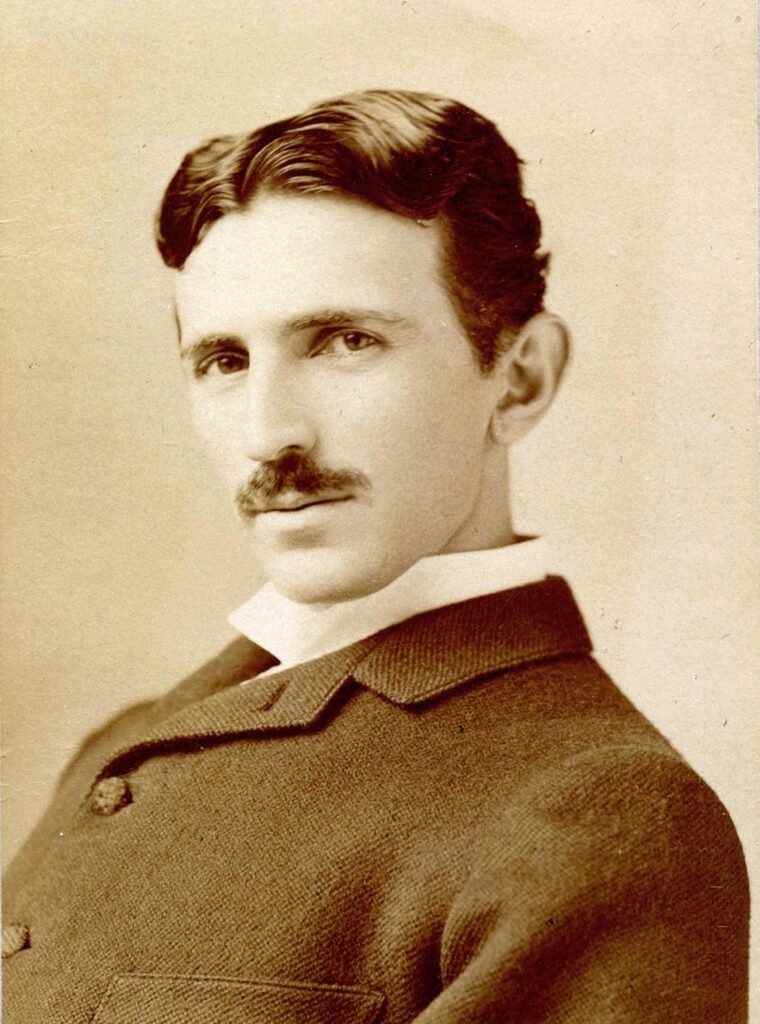
Nikola Tesla
Nikola Tesla was born on 10 July 1856 in Smiljan, in what is today Croatia, then part of the Austro-Hungarian Empire. Of Serbian origin, he grew up in an educated family: his father, an Orthodox priest, was also a writer, while his mother, who was self-taught, was known for her remarkable talent for inventing and making household tools. Scientific Beginnings Tesla studied electrical engineering in Austria, then worked in Europe before moving to the United States in 1884. Upon his arrival, he briefly collaborated with Thomas Edison, but their differing scientific visions quickly led to a split. Tesla is mainly recognised for promoting the use of alternating current (AC), which he considered far more efficient than the direct current (DC) defended by Edison. In partnership with the industrialist George Westinghouse, he contributed to the construction of the first major hydroelectric power station at Niagara Falls, based on his AC technology. A visionary inventor During his lifetime, Tesla filed around 300 patents covering nearly 125 inventions, several of which were unfairly attributed to Edison. He developed new approaches to energy conversion and remains considered one of the most brilliant and creative engineers of the late nineteenth and early twentieth centuries. However, Tesla preferred to see himself not as an inventor, but as a “discoverer”. Always ahead of his time, Tesla conceived ideas that seemed impossible in his era, such as the wireless transmission of energy over long distances. To this end, he began the construction of a monumental tower: the Wardenclyffe Tower, built between 1901 and 1917 on Long Island, near New York. This ambitious project, intended to enable telephony, transatlantic wireless broadcasting, and energy transmission, was abandoned due to a lack of funding. Tesla had also anticipated applications remarkably close to modern technologies such as the fax machine, geolocation, clock synchronisation, and the radio broadcasting of music and information — at a time when these concepts did not yet even exist. End of Life and Posthumous Recognition Nikola Tesla died on 7 January 1943, at the age of 86. He died alone in his hotel room, room 3327 at the New Yorker Hotel in New York, probably as a result of coronary thrombosis, or a heart attack. Today, Nikola Tesla is celebrated as a genius ahead of his time, whose work profoundly shaped the modern world. The unit of measurement for magnetic field strength is named after him, the tesla, and the famous company Tesla, Inc., founded by Elon Musk, pays tribute to him. Sources: https://fr.wikipedia.org/wiki/Nikola_Tesla https://www.nikolateslalegend.com/ By Napoleon Sarony — Marc Seifer Archive, Public Domain, https://commons.wikimedia.org/w/index.php?curid=30659157
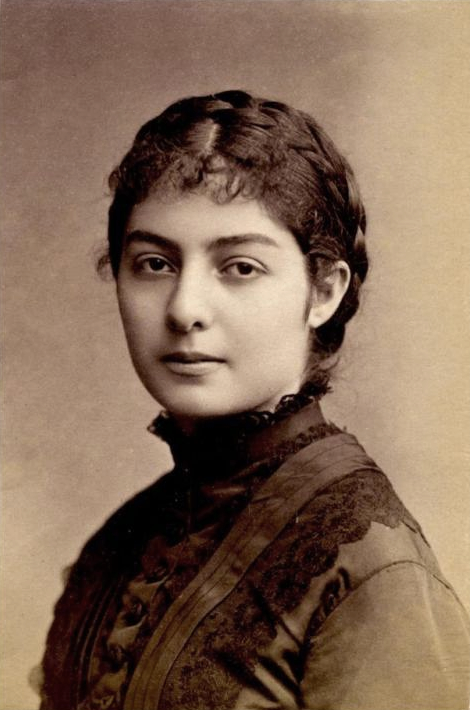
Queen Natalija Obrenović
From Florence to Belgrade : the turbulent life of Natalija Obrenović Natalija Obrenović, born Natalia Keșco in 1859 in Florence, was Queen Consort of Serbia from 1882 to 1889 alongside her husband, King Milan I Obrenović. Born into the Moldavian nobility, she experienced a youth marked by the loss of her parents and was educated under the care of her uncle. Her marriage to Milan was soon troubled by marital tensions and political differences: while Milan grew closer to Austria-Hungary, Natalija supported Russia. Their relationship deteriorated to the point that Natalija left the country in 1887 with their son, Aleksandar. Their divorce was granted and later annulled, and in 1889 Milan abdicated in favour of Aleksandar, briefly making Natalija regent of the kingdom. The light of an engagement ! After her forced exile and temporary return to Belgrade, Natalija was permanently banished in 1900 for opposing her son’s marriage to Draga Mašin. In 1903, Aleksandar and Draga were assassinated during a coup d’état, bringing the Obrenović dynasty to an end. As the last representative of this lineage, Natalija withdrew to France, converted to Catholicism, and entered religious life. She devoted her life to charitable work, supporting war-wounded soldiers and women’s education, while also acting as a patron of artists and intellectuals. She died in 1941 in Saint-Denis and was buried in the old cemetery of Lardy, leaving behind an important cultural and philanthropic legacy. The FYSE pays tribute to Natalija Obrenović On 4 May, in the presence of Mrs Anđelka Šimišić, Consul of the Republic of Serbia, we laid wreaths to mark the 84th anniversary of the death of Queen Natalija Obrenović. Although she lived for many years far from Serbia, Queen Natalija never forgot her homeland, which she loved deeply. Through her generous bequests, she left a lasting mark, particularly through her support for the University of Belgrade and the Serbian people as a whole. Sadly, her grave remained forgotten for many years. Through this gesture, we pay tribute to her unwavering commitment to Serbia. The ceremony took place in the presence of Mr Dragan Lernić, president of the organisation “Vivre Ensemble”. Sources: Par unattributed — photovintagefrance, Public domaine, https://commons.wikimedia.org/w/index.php?curid=15769995 https://fr.wikipedia.org/wiki/Natalija_Obrenovi%C4%87

Paja Jovanović
Imagine an artist whose brushstrokes succeeded in bringing history back to life, whose paintings became symbols of national pride, and whose art crossed borders and eras. Such was Paja Jovanović — a painter who brought Serbian culture and tradition onto the European artistic stage, leaving behind masterpieces that continue to inspire us today. His works are not merely paintings, but visual narratives that speak of heroes, customs, and the spirit of the age. Paja Jovanović was not only an artist — he was the chronicler of a people, a visionary, and an ambassador of beauty. Childhood and Education Paja Jovanović was born on 16 June 1859 in Vršac, into a family of craftsmen. His first contact with art came from the atmosphere of his home, but from a very young age he showed a talent for drawing. His father, Stevan Jovanović, was a well-known photographer in Vršac. This allowed him to come into contact with photography, and more generally with art, from childhood. His mother was named Ernestina, née Doet, and was of French origin. Paja had five brothers and one sister, and was always surrounded by the warmth of a large family. From an early age, he showed an interest in art, especially thanks to his father, since working in photography at that time required not only technical knowledge, but also a skilled hand for retouching images. In Vršac, he also had the opportunity to be around great painters such as Arsenije Arsa Todorović, Pavel Đurković, and Jovan Popović. To support his interest in art, his father sent him to Belgrade, where Paja had the opportunity to develop in a cultural and intellectual environment. This is how Paja Jovanović began to draw, at first secretly, copying religious images and spending hours in an empty church, which he considered his first teacher. However, when the parish of Vršac decided to order new bells for the cathedral and drawings of saints were needed — copies of the icons from the church in Vršac, from which reliefs would later be made on the bells in Vienna — his talent was discovered. At the age of fourteen, Jovanović received his first commission and, thanks to much praise, gained a kind of passport to Vienna and the possibility of entering the Academy of Fine Arts. At a very young age, he showed exceptional ability in the visual arts, and his parents therefore decided to enrol him at the School of Arts and Crafts in Belgrade. There, he received a basic artistic education, learning to draw, paint, and master fundamental techniques. In April 1877, he enrolled in a general painting course at the Academy of Fine Arts in Vienna, and by October of the same year he had become a regular student at the academy, studying under the highly respected professor and skilled teacher Christian Griepenkerl (1839–1916). He completed his regular painting studies in three years, on 21 July 1880, but continued his training under the same professor in a special course devoted to historical painting. At the same time, he further developed his skills in the master class of Professor Leopold Karl Müller (1834–1892), a painter who was highly sought after and praised at the time for his historical and genre painting, especially his works with Oriental themes, particularly scenes from Egypt. Jovanović soon became his best student. Although he was influenced by academicism, Paja Jovanović’s training in Vienna also exposed him to other artistic movements, such as Romanticism and Realism, which would later influence his work. In addition, his time in Vienna allowed him to develop a deep understanding of art and to master painting techniques, particularly in the context of historical compositions and portraiture. Voyages Paja travelled widely around the world, observing landscapes, peoples, and cultures that he later transferred into his paintings. His professor at the Academy of Fine Arts in Vienna advised him to visit his region of origin, where he could paint a large number of Oriental motifs. Paja therefore travelled through Serbia, Montenegro, Bosnia, and Albania, painting scenes of everyday life. Enriched by these impressions, he went on to paint many genre scenes, including The Wounded Montenegrin, The Duel, The Epic Singer, The Bride’s Adornment, In Ambush, The Albanian, The Arnaut with a Chibouk, The Traitor, Blood Feud, and The Cockfight. These works attracted attention in nineteenth-century Europe, at a time when Europe was highly interested in events in the Balkans. His first recognition came in 1882, during his studies in Vienna, for his painting The Wounded Montenegrin. This painting was exhibited at the Academy’s annual exhibition and won him first prize as well as an imperial scholarship. The following year, he signed a ten-year contract with the famous gallery owner Valis for the French Gallery in London and, at the end of 1883, moved there to live and work. His works sold very well, which freed him completely from financial worries and allowed him to travel frequently to distant and expensive destinations, including North Africa, Morocco and Egypt, as well as Greece, Turkey, Italy, and Spain. With his friend, the Russian painter Franz Roubaud, he spent six months in the Caucasus. Shortly afterwards, he left London and moved to Munich, then to Paris, before returning to Vienna. Borba petlova Kićenje neveste Odmor Bošibozuka Relations with France Paja Jovanović maintained a deep and meaningful relationship with France throughout his artistic development and career. After his studies in Vienna, where he acquired his basic artistic skills, Paja travelled to Paris, then the artistic centre of the world, to further refine his craft. There, he was influenced by French academicism and realism, which helped shape his work. In Paris, he studied the works of great masters such as Eugène Delacroix and Gustave Courbet, who helped him develop his technique and his approach to historical