Geopolitics eng

cuture eng, Geopolitics eng, Géopolitique, historical archives

Identity: A False Concept or Reality?

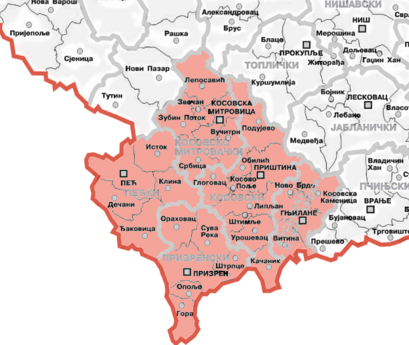
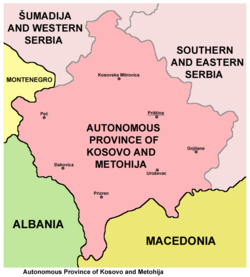
From Renan to Kosovo: a reflection on what unites us Carried by the wave of Europe’s migration-shaped electoral politics, the question of identity has imposed itself across all political debates in Europe. This concept, often used imprecisely, provokes significant controversy, as it has never been clearly defined. During the First Congress of Serbian Youth, organized in Vienna on 7 June 2025, while discussions among participants had only just begun with the aim of defining a strategy for the development of Serbian diaspora organizations, the debate quickly shifted toward a reflection on what it actually means to be Serbian. Very different ideas immediately emerged, revealing how difficult it is to define identity. This shift in the discussion toward a question that is at once broad and unresolved highlights a deeper issue: can collective identity still be clearly and commonly defined? And if not, what is the point of speaking about it at all? Identity remains an unresolved question. Yet, as with “woke” ideology, its use in public discourse was supposed to ensure a clear definition. One might therefore assume that the very lack of consensus around the definition of identity explains the differences in how people understand what it means to belong to a nation. The truth is that agreement on such a definition is impossible: the Congress itself could not resolve a debate that has lasted for centuries. Identity is defined as “the character of that which, under different names or forms, constitutes one and the same reality,” according to CNRTL. It is therefore closely linked to the concept of the nation, which is also at the heart of political debate. In this sense, it might be more precise to speak of national identity in order to avoid confusion with individual identity. The question of the nation has long been central to profound philosophical reflections, which help us understand that the debate held at the Vienna Congress, although legitimate, is ultimately infinite in scope. And what is infinite is abstract and beyond our rational grasp: the debate therefore appears futile and unnecessary. The very idea of the nation has divided European societies, sometimes even neighbouring ones. Thus, after the fall of Prussia under Napoleon’s control of the territory, Fichte (Reden an die deutsche Nation, 1808) called for a spiritual and moral renewal of the German people by awakening their national consciousness. For him, the nation refers to a community of language and culture, rather than a legal or political construct. It precedes the state, which exists only to serve it. The people are united by language, education, and culture. Later, Renan developed the “French vision” of the nation in his famous lecture at the Sorbonne in 1882. At a time when nationalism was rising in France following the defeat by Prussia, Renan sought to define the nation from a republican and rational perspective, in opposition to certain identitarian deviations. He argues that the nation is a historical and political construction based on the will to live together. The nation, therefore, is neither race nor language (which may bring people together but does not impose obligation), and even less religion or geographic boundaries. It is characterized by a shared past, through collective memory marked by common suffering and shared glory, as well as by a present-day desire to continue this shared history: what he calls a “daily plebiscite.” This French vision has long existed. The principle of jus soli (right of the soil) has its customary origin in a ruling of 23 February 1515 by the Paris Parliament: a child born to foreign parents was considered a subject of the king, and thus French. After the Revolution, the Napoleonic Code allowed children of foreigners born in France to claim citizenship upon reaching adulthood. In 1889, the Third Republic automatically granted French citizenship to every child of foreign parents born in France, unless they chose to refuse it. This principle is today the subject of numerous criticisms (notably in Mayotte) and has been modified several times. It seems clear today that the French philosophical approach has been confirmed by reality. If some find it difficult to accept, the proof was given during the Congress in Vienna: language or religion can no longer define a nation. Without delving into the fact that many people know the French language and history without feeling French at all, the example of Kosovo is more than sufficient. After the Second World War, Marshal Tito decided to accept Albanian refugees and to marginalise Serbs from that territory, which is nevertheless central to their history, since the Battle of Kosovo (1389) where they managed, despite all circumstances, to repel the Ottomans. Albanians attended Serbian schools, learned their language and history, and benefited from a Yugoslavia that offered them more than they would have had in Albania. One might therefore assume that, after one or two generations, they would become Serbs, at least out of gratitude. Yet, despite everything, they did not hesitate to form an armed organisation that some states labelled as terrorist (the KLA) in order to achieve independence, in violation of international law but with NATO military support. If the West made a strategic mistake here (and itself receives large numbers of migrants, while Russia today uses this tragic violation of international law to justify its “military operation” in Ukraine), the fact remains that a nation is not a matter of language, culture, or religion, but of feeling. It therefore seems clear that, in relation to this issue so important for Serbs, the debate perhaps should not have taken place at all. There is also the question of Serbs whose ancestors emigrated to other countries and who have lost their connection to the homeland. Is it less legitimate to consider them Serbs? Simply because they do not speak the language or are only learning it? And what about those who have fallen in love with Serbia and wish to become Serbian? The question remains without a definitive answer. Yet it seems to me that this debate,

Geopolitics eng

Identity: False Concept or Reality?

From Renan to Kosovo, a reflection on what unites us. Driven by a navy-blue electoral wave, the question of identity has imposed itself on all political debates in Europe. This notion, used indiscriminately and often imprecisely, has sparked major controversy, largely because it has never been clearly defined. During the first Congress of Serbian Youth, organised in Vienna on 7 June 2025, the debate among those present had only just begun, with the aim of determining a strategy for the development of Serbian diaspora organisations. However, the discussion quickly turned into a reflection on what it truly means to be Serbian. Very different ideas immediately emerged, revealing just how difficult it is to define identity. This shift in the debate towards such a vast and unresolved question points to a broader problem: can collective identity still be defined in a clear and shared way? And if not, what is the point of discussing it? The issue of identity remains unresolved. Yet, as with “wokism”, its use in public debate should have allowed for a clear definition. We might therefore have thought that the lack of agreement on the definition of identity explains the divergences over what it means to be a member of a nation. The truth is that agreement on the definition remains impossible: the Congress alone could not resolve a debate that is several centuries old. Identity is defined by the CNRTL as the “character of that which, under different names or aspects, is one, or represents one and the same reality”. It therefore seems to be closely linked to the notion of the nation, which is also at the heart of our political debates. It might therefore have been more useful to speak of national identity, in order to avoid any confusion with individual identity. The question of the nation has been at the centre of a deep philosophical reflection, one that is worth addressing in order to understand that the debate which took place at the Congress in Vienna is certainly legitimate, but endless. Yet the endless is abstract and exceeds our rationality: the debate therefore seems vain and useless. The very idea of the nation has divided European societies, sometimes even neighbouring ones. Thus, when Prussia collapsed following Napoleon’s takeover of its territory, Fichte, in Addresses to the German Nation (1808), called for a spiritual and moral rebirth of the German people by awakening their national consciousness. For him, the nation refers to a community of language and culture, not a legal-political creation. It precedes the state, which merely serves it. The people are united by language, education, and culture. Later, Renan would develop the “French vision” of the nation in his famous speech at the Sorbonne in 1882. At a time when nationalism was gaining momentum in France following its defeat by Prussia, Renan sought to define the nation from a republican and rational perspective, in response to certain identitarian excesses. He therefore argued that the nation is a historical and political construction founded on the will to live together. The nation is therefore neither a race, nor a language (which allows people to come together but does not force them to do so) and even less a religion or a geographical border. A nation is characterised by a shared past, through a collective memory made up of shared suffering and shared glory, as well as a present will to continue upholding this common heritage: he called this the daily plebiscite. This French vision has, moreover, existed for a long time. Jus soli, the right of the soil, finds its customary character in a ruling of 23 February 1515 by the Parliament of Paris: a child born to foreign parents was a subject of the king, and therefore French. After the Revolution, the Napoleonic Code allowed foreign children born in France to request French nationality in the year following their majority. In 1889, the Third Republic made every foreign child born in France automatically French, unless they refused to become so. This right is today at the centre of much criticism, particularly in Mayotte, and has been revised many times. Yet today it seems clear that French philosophy has been validated by reality. Although it may be difficult for some to accept, this was demonstrated at the Congress. In Vienna, language or religion can no longer be used to characterise a nation. Without even needing to address the fact that many people know the French language and French history but do not feel French at all, the example of Kosovo is more than sufficient. After the Second World War, Marshal Tito decided to welcome Albanian refugees and to make Serbs leave this territory, although it was central to their history, since it was there that they managed, against all expectations, to resist the Ottomans in 1389. The Albanians associated with Serbs, attended their schools, learned their language and history, and benefited from the wealth of a Yugoslavia that far exceeded anything they could have had in Albania. We might therefore have legitimately believed that they would become Serbs within one or two generations, if only out of gratitude. Yet, despite all this, they did not hesitate to form an armed organisation classified as terrorist by several states, the KLA, in order to secure independence in violation of all the rules of international law, obtained because it was militarily supported by NATO. If the West made a strategic error here (since it too massively welcomes foreign populations, and Russia today relies on this bloody violation of international law to justify its “military operation” in Ukraine) it nevertheless remains true that the nation is not a matter of language, culture, or religion, but rather of feeling. It therefore remains clear that, regarding this question, so precious in the eyes of Serbs, the debate should not have taken place. This also raises the question of Serbs whose ancestors emigrated to other countries and who have lost all connection with the homeland. Would they be less legitimate

Geopolitics eng

A Vision Cut Short: How the Assassination of Zoran Đinđić Took Place

       The assassination of Zoran Đinđić on the 12th of March 2003 was not only an attack on one man, but also on the vision of a modern, European Serbia, that he was striving to build. This crime symbolises the political and social situation of the time, marked by organised crime, poverty, and exhaustion caused by the wars of the previous decade. However, this period was also characterised by a certain optimism and by the hope of a new beginning after the fall of Slobodan Milošević’s regime, with the introduction of progressive ideas and the reform efforts led by Zoran Đinđić. Sadly, his premature death prevented him from carrying out these reforms fully.        To understand how this assassination was able to take place, it is first necessary to examine the broader political situation at the beginning of the 2000s. This period was marked by strong pressure from the international community, a disastrous economic situation, the presence of criminal groups, corruption within state institutions, the excessive autonomy of the Special Operations Unit (JSO) at the time, and disagreements within the ruling coalition. Who was Zoran Đinđić ?        Zoran Đinđić was born on 1 August 1952 in Bosanski Šamac, today located in Republika Srpska, Bosnia and Herzegovina. He later moved to Belgrade, where he completed his secondary education at the Ninth Belgrade Gymnasium. After graduating, Đinđić began studying philosophy at the University of Belgrade. It was during this period that he began his informal political career through student activism, becoming the leader of the Student Union at the Faculty of Philosophy. During this time, he openly criticised the ruling regime, advocating democracy and freedom of expression while denouncing authoritarianism. In 1974, he took part in a student meeting in Ljubljana and contributed to the drafting of the “Resolution of the Student Unions of the Faculties of Philosophy of Belgrade, Ljubljana and Zagreb”. This act led to his arrest and a one-year prison sentence, which he avoided thanks to influential family connections. Faced with conflicts with the socialist regime of the time, Đinđić left for Germany, where he continued his studies at the University of Konstanz. Under the supervision of the renowned philosopher Jürgen Habermas, he defended a thesis entitled “Problems in the Foundation of Critical Social Theory”.        In 1989, Đinđić returned to Yugoslavia, where he taught philosophy at the University of Novi Sad and worked as a senior researcher at the Centre for Philosophy and Social Theory in Belgrade. In 1990, he co-founded the Democratic Party (DS) with like-minded colleagues, first becoming president of its executive committee and then, in 1994, president of the party, succeeding Dragoljub Mićunović. Đinđić was elected as a member of the National Assembly of the Republic of Serbia, where he served during three multi-party parliamentary terms, as well as in the Council of Republics of the Federal Assembly of the Federal Republic of Yugoslavia. With Vesna Pešić and Vuk Drašković, December 4th 1996        In November 1996, despite his reservations, the Democratic Party took part in the local elections as part of the “Zajedno” coalition (“Together”), alongside Vuk Drašković’s Serbian Renewal Movement and Vesna Pešić’s Civic Alliance of Serbia. This coalition won the elections in Belgrade, Niš, and Novi Sad, but Slobodan Milošević refused to recognise the results, triggering large-scale demonstrations that eventually forced him to give in. Đinđić then became president of the Belgrade City Assembly, but he was removed from office after only seven months. Shortly afterwards, the “Zajedno” coalition dissolved due to strategic disagreements.        At this time, Đinđić became an increasingly threatening figure to Milošević’s regime. Fearing for his life, he temporarily left the country in 1999 after the assassination of journalist Slavko Ćuruvija. He returned later that same year and, despite the regime’s attempts to sideline him, led the Democratic Opposition of Serbia (DOS) coalition, made up of 18 parties, to victory in the 2000 parliamentary elections.        The main aim of this coalition was to overthrow Milošević. It won 64.09% of the vote, while Vojislav Koštunica won the presidency. Milošević’s refusal to recognise his defeat triggered the famous demonstrations of 5 October, which led to his downfall. On 25 January 2001, Zoran Đinđić became Prime Minister of Serbia, while Vojislav Koštunica held the position of President of the Federal Republic of Yugoslavia. The 5th of October 2000        At that moment, the DOS was aware of its popular support, but the main obstacle lay in the state institutions that had remained loyal to Milošević, particularly the Special Operations Unit (JSO), led by Milorad Ulemek Legija and also known as the “Red Berets”. Operating under State Security, this unit was used by Milošević for “dirty work”, such as the assassination of political opponents, including the kidnapping and murder of former president Ivan Stambolić, an attempted assassination of Vuk Drašković on the Ibar Highway, the murder of critical journalist Slavko Ćuruvija, the kidnapping of businessman Miroslav Mišković, and many other crimes.        Aware of this danger, the DOS leadership feared that the JSO might be ordered to open fire on the demonstrators. To prevent this, Zoran Đinđić reached an agreement with Legija, who, seeing that Milošević’s end was imminent, agreed not to fire on the protesters, thereby signalling his tacit acceptance of the new government. Under the pressure of these mass demonstrations, Slobodan Milošević recognised his defeat the following day in a televised address. On 7 October, Vojislav Koštunica was sworn in as president, and shortly afterwards a new administration was formed under Zoran Đinđić, who took office on 25 January 2001.        After the presidential elections of the Federal Republic of Yugoslavia, held on 24 September 2000, the outgoing president, Slobodan Jovanović, declared that the main opposition candidate, Vojislav Koštunica, leader of the Democratic Opposition of Serbia (DOS), had received only 49% of the vote, making a second round necessary. In response, the DOS called on citizens to

Scroll to Top