The Magic of Belgrade – Literary Review
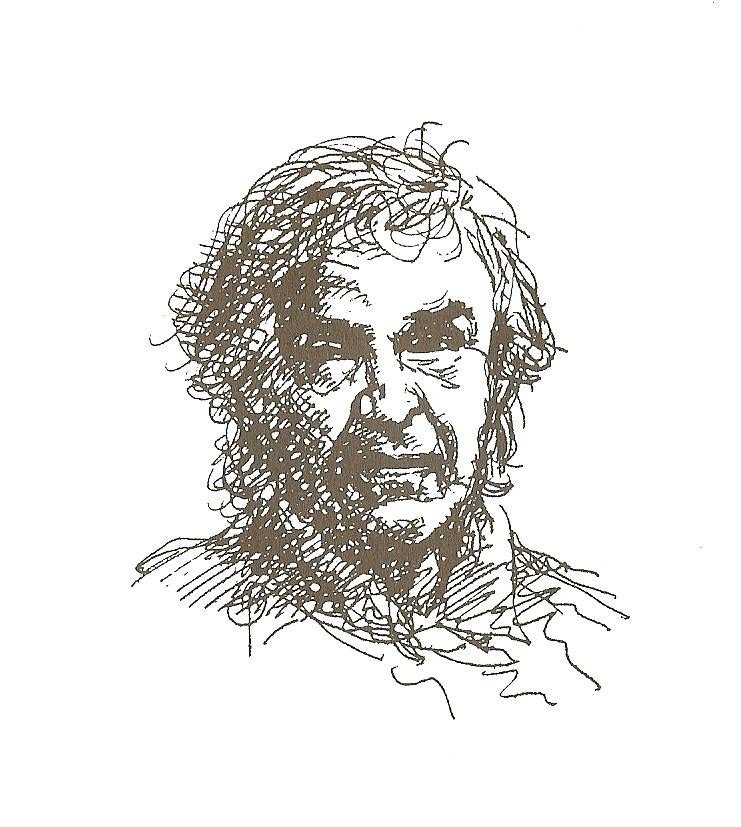
The Magic of Belgrade – Momo Kapor The book every Serb must bring with them when they leave Serbia. I know—the title has taken you by surprise. As it should. That is precisely the feeling you experience when you first pick up Momo Kapor and plunge into the opening pages of his work. It happened to me on a February morning, when I came across The Magic of Belgrade on the shelves of the Sorbonne library and, almost by chance, began to read it. It awakened in me that familiar feeling I despise, the one that overcomes me time and again whenever I take off from Belgrade Airport toward that accursed West: the anguish, the pain, the tightening of the chest—all those emotions that we who seek a utopia in Western society feel each time we leave our homeland behind. You know the feeling yourselves; I need not remind you of those turbulent moments of parting. Momo Kapor will do so in my stead, more eloquently and more beautifully than I ever could. One of the most significant chroniclers of Belgrade—and indeed of all Serbia and the Serbian mentality—Kapor writes about something that extends far beyond the geographical boundaries of the Republic of Serbia and the region. Belgrade is, in fact, Serbia in miniature: a city to which people from all corners of the Serbian lands have always come, bringing with them their accents, mentalities, and habits, blending them into that unique Belgrade mixture. Momo Kapor himself belongs to that kind: an eccentric who came to Belgrade, a true Belgrader by choice, of the sort this city has always abounded in. And it is precisely from this dual position, as both observer and participant, that he succeeds in laying bare the Belgrade man to his very core. In my deepest conviction, Kapor is above all a chronicler of the Serbian mentality in its broadest sense. I say this on the basis of my own experience: I found myself on ninety percent of the pages of this book, despite having almost no connection to Belgrade beyond occasional visits. Just as the author himself once said—and as we all know—Belgrade is one great village, which is to say: Serbia. What particularly reveals the greatness of this writer is his constant walk along the thin line between patriotism and chauvinism, and the fact that he never once stumbles into the kind of praise that reeks of cheap sentimentality. This sense of measure is perhaps owed to his Herzegovinian side, much as it was in the case of Dučić and others who gave Serbia some of its most powerful voices precisely from that slightly displaced perspective. Why, then, is this book essential reading for every Serb who leaves Serbia? Because Kapor ultimately answers the question we all carry within us, no matter how hard we try to suppress it. Why, every single day, regardless of all we have achieved and everything we once hoped for, we have the feeling that something is missing. That we are incomplete. That there is one final piece absent from the puzzle, the piece that would complete the perfect mosaic of life in the West. Kapor offers us possible answers, and he does so with a lightness that hurts more than any philosophical debate. Perhaps it is the smell of sauerkraut that greets you the moment you step into your apartment building. Perhaps it is the bench where you kissed a girl for the first time. Perhaps it is that tavern in Skadarlija where you first got drunk and, paradoxically, first felt perfectly at home. These are all the little things we never take into account when we pack our suitcases and leave forever for a place where none of them exist, and where, only then, those very same trifles begin to haunt us like the loveliest of ghosts. For, with that characteristically subtle and gentlemanly finesse of his, Kapor has left us a gallery of characters we shall mourn forever: those cosmopolitan Belgraders, native sons of the city who, when you meet them in Paris or Geneva, themselves no longer know how to reconcile what they once were with what they have become. I often speak of them with my friends, because that type of person—elegant beyond place and time—exists only among “Beogradjani” and nowhere else. Kapor portrays them in several chapters that, to me, are among the most vivid in the book: The Belgrade Flea Market, with all its virtues that the native Belgrader nevertheless despises, because nothing there is as perfectly ordered as in his father’s apartment on Mackenzie Street; but also in the chapter titled Return to the Homeland, where coming back to one’s country becomes the most intimate and cruel mirror of the self, the naked truth. Then there are chapters such as A Belgrader in Switzerland, In the Great World, and Belgrade Is the World, which together form an unwritten map of the Serbian soul scattered across foreign meridians. Yet this book is not indispensable only to those who have already left. It is equally necessary for every Serb who has ever entertained the thought of leaving but has not yet taken that step. Every time that they feel that they have had enough of everything, let them pick it up and read only a few chapters; they will understand why Serbia is not a country like any other, why it is a place that exists nowhere else in the world. And there is one more group for whom this book is simply essential: foreigners who wish to understand the Serbian mentality to its very core, who wish finally to grasp why they are so fascinated by us whenever they meet us somewhere in the world. From Alaska to New Zealand, everyone who comes to Serbia leaves pleasantly surprised. When we ask them why, we ourselves do not know how to answer, and together we remain puzzled by that little miracle. Well then, to both them and to us, Momo Kapor offers